NavigateMENU / 04
More
Elsewhere
Website Development
Digital Infrastructure
Hopewell Residential is one of Calgary and Edmonton's best-known home builders. Daughter Creative reimagined their brand and designed the site. We engineered it, a Sanity and Next.js platform that runs the whole business: a deep home directory, automated ad feeds, on-demand sales brochures, and Salesforce woven throughout.
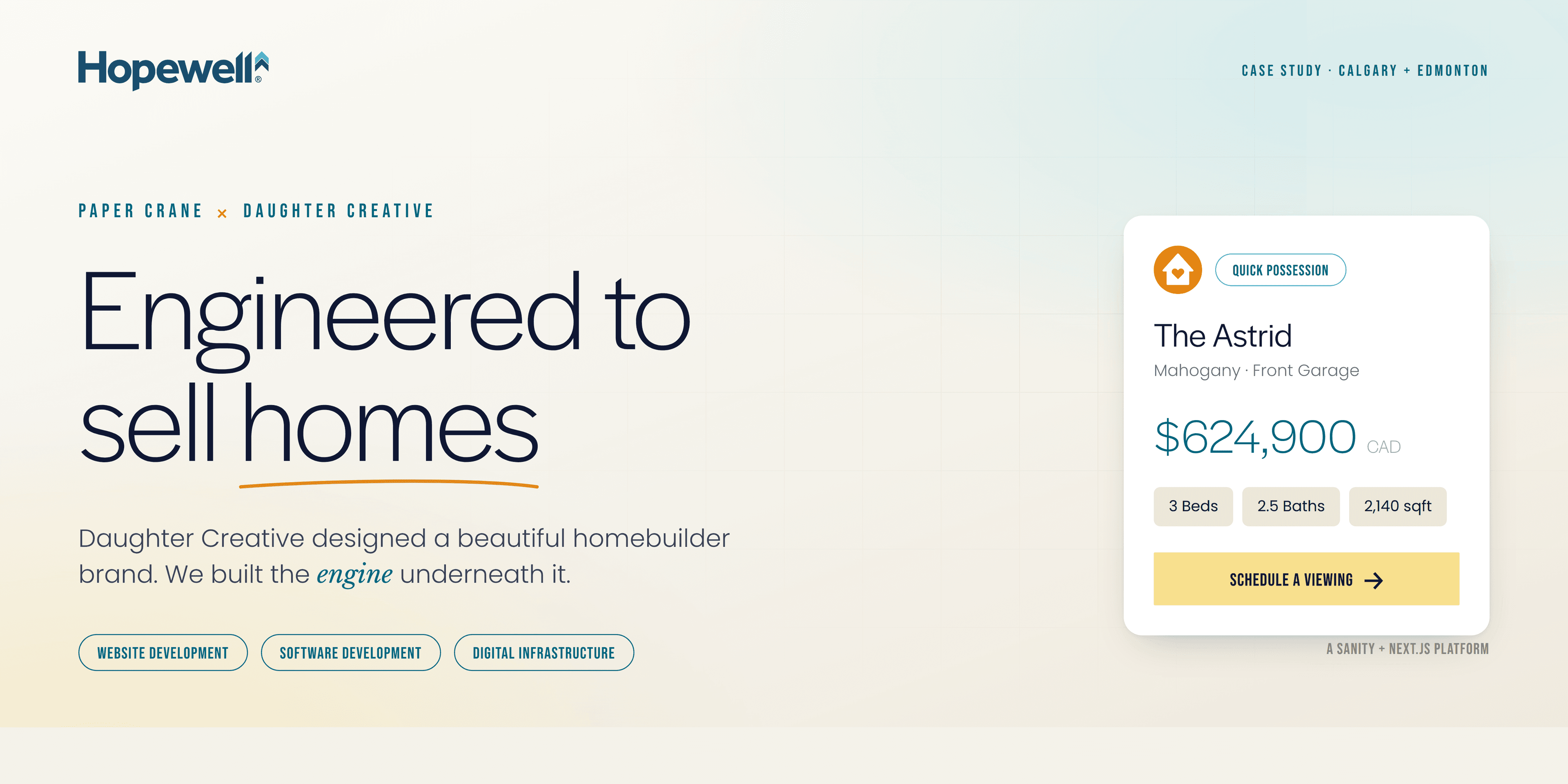
Hopewell Residential is one of Calgary and Edmonton's best-known home builders, with new homes selling across dozens of communities in two cities. Daughter Creative reimagined the brand, the strategy, and the content, and designed a site to match. Our job was to make all of it real, and to make it run.
A home builder's website is really an inventory platform. Hundreds of homes change in price and availability every week, fed by sales teams, ad agencies, and a CRM. Hopewell needed software that could keep all of it accurate, fast, and easy to manage, across both markets at once.
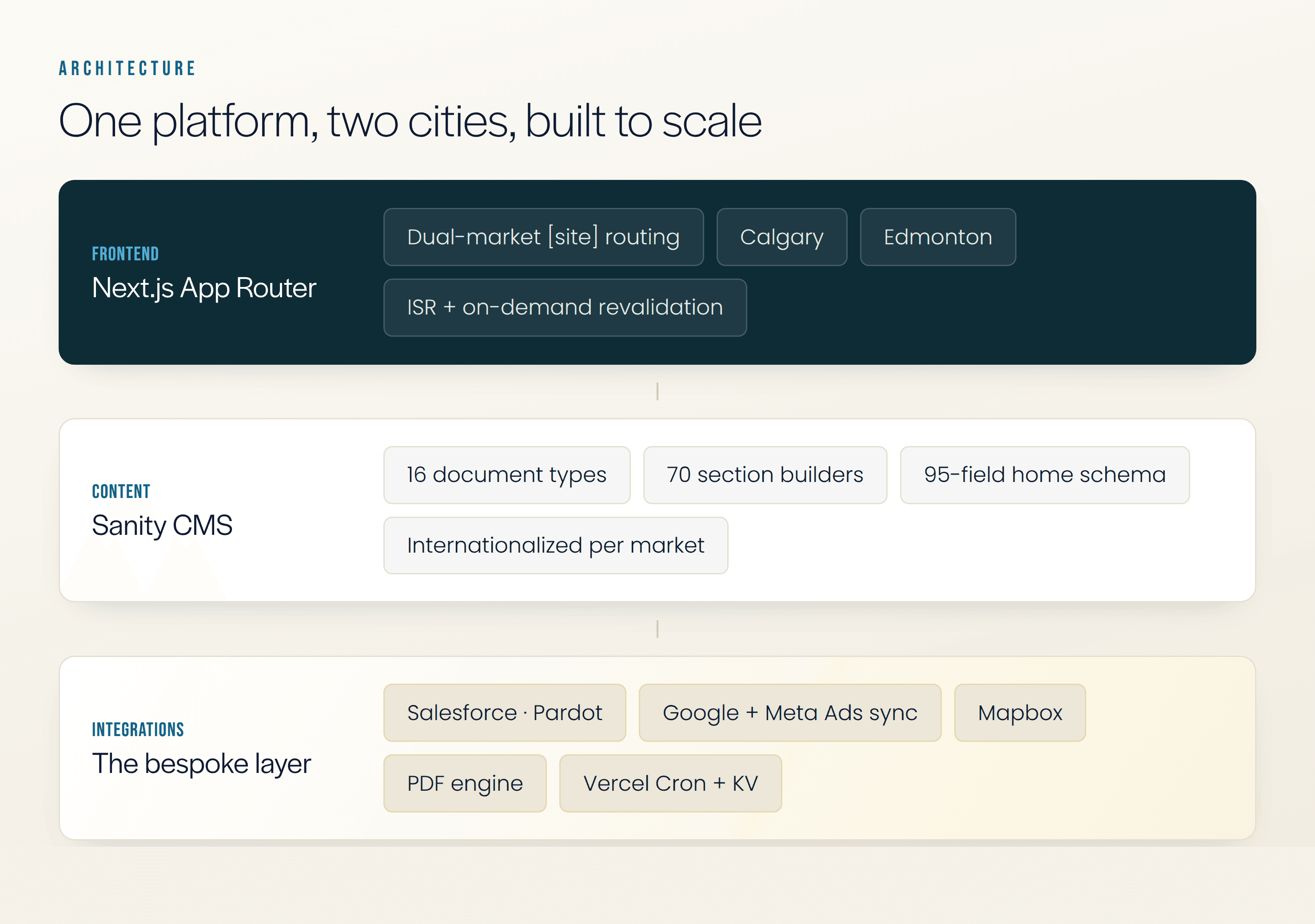
Daughter Creative owned the experience: the UX, the UI, the brand, the words, and the relationship with Hopewell. We took their design and engineered the whole thing, a Sanity and Next.js platform built to enterprise standards.
Everything routes through a single dual-market system. Calgary and Edmonton each get their own communities, content, and navigation, all from one codebase and one CMS. Add a community in one city and nothing leaks into the other.

We built this one alongside Daughter Creative. They led the brand, the strategy, the content, and the entire experience design, and brought us in to engineer it. A genuine partnership: their craft on the surface, ours underneath.
A platform deep enough to run the business, not just show it:
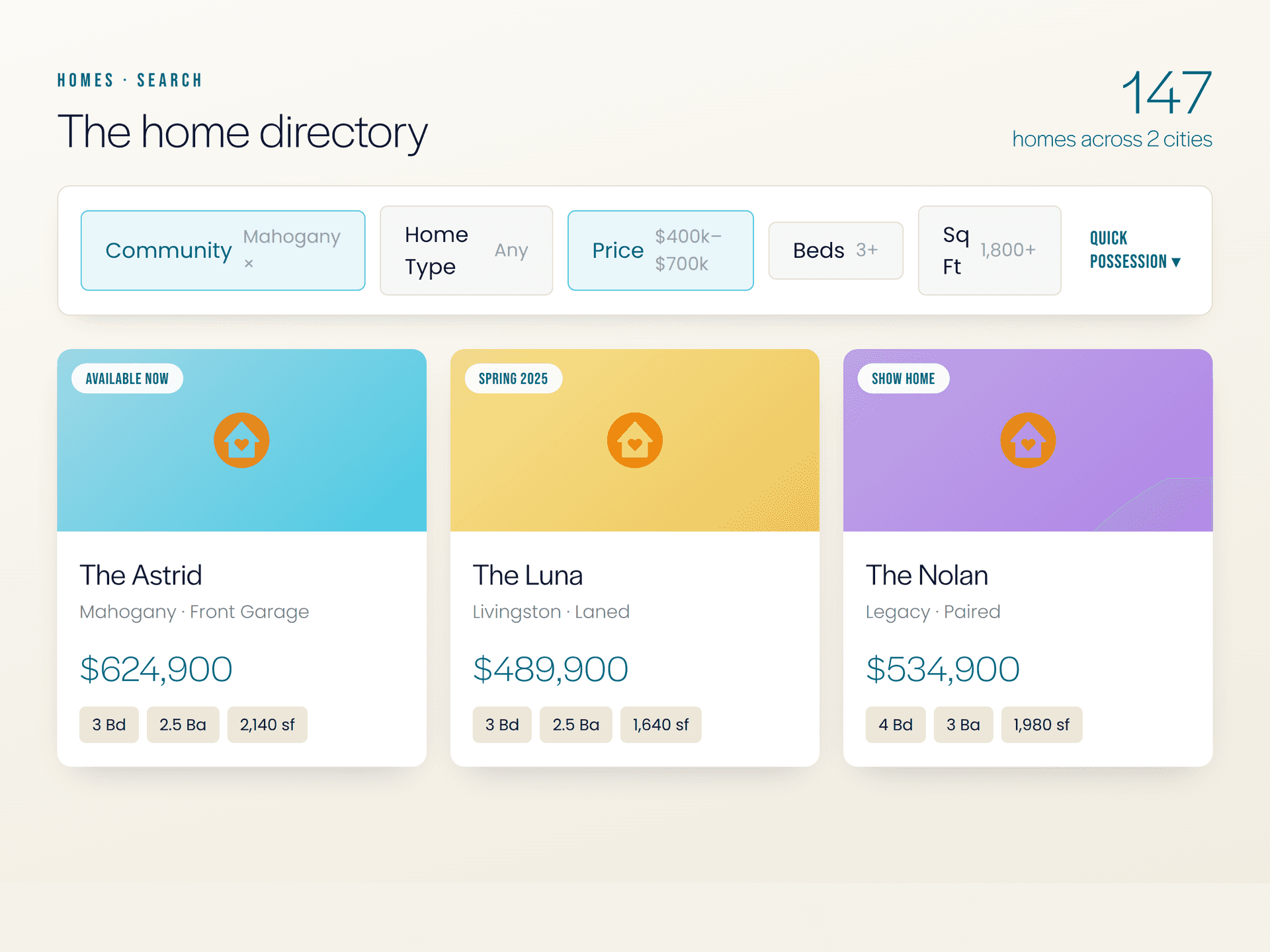
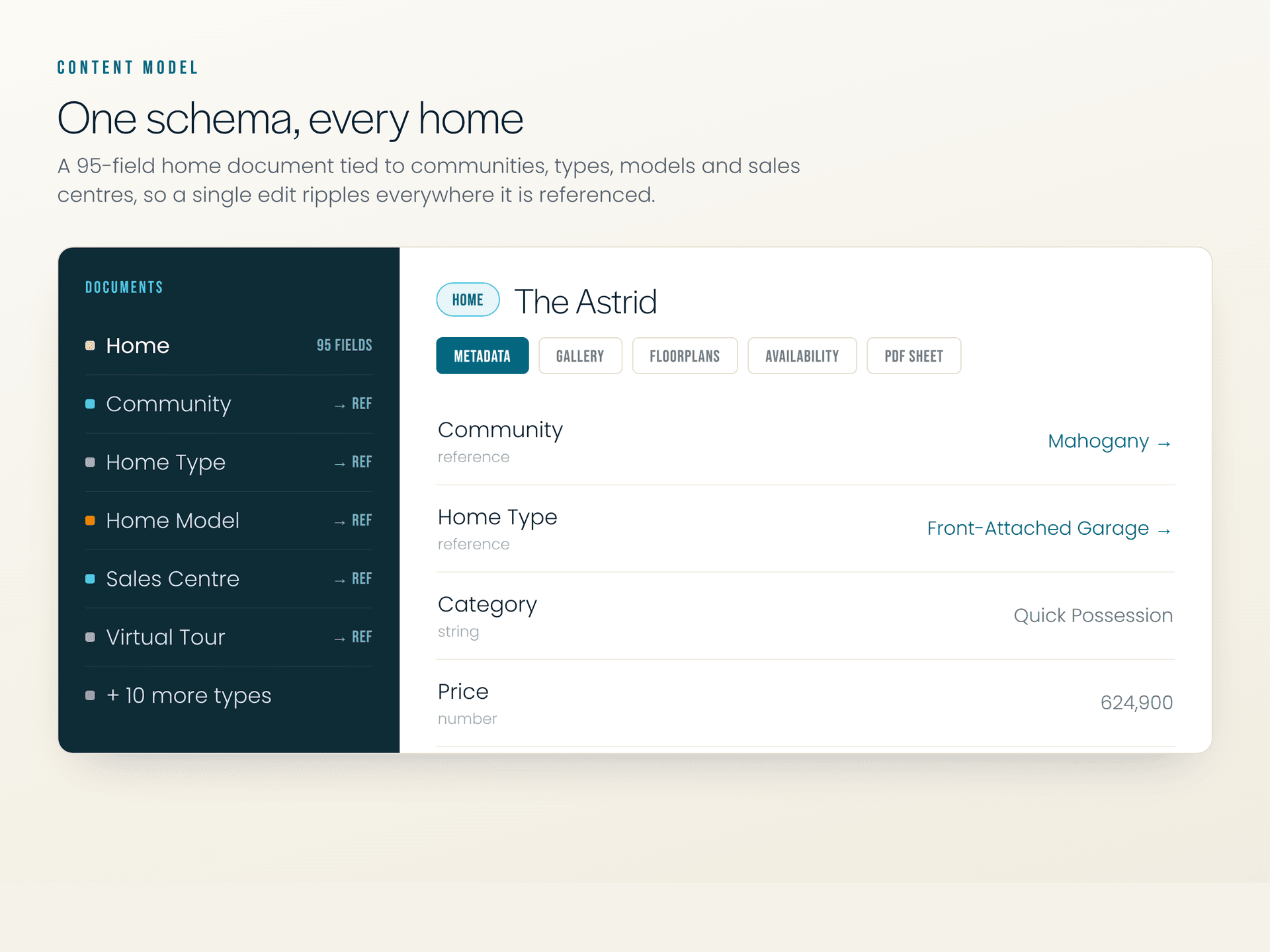
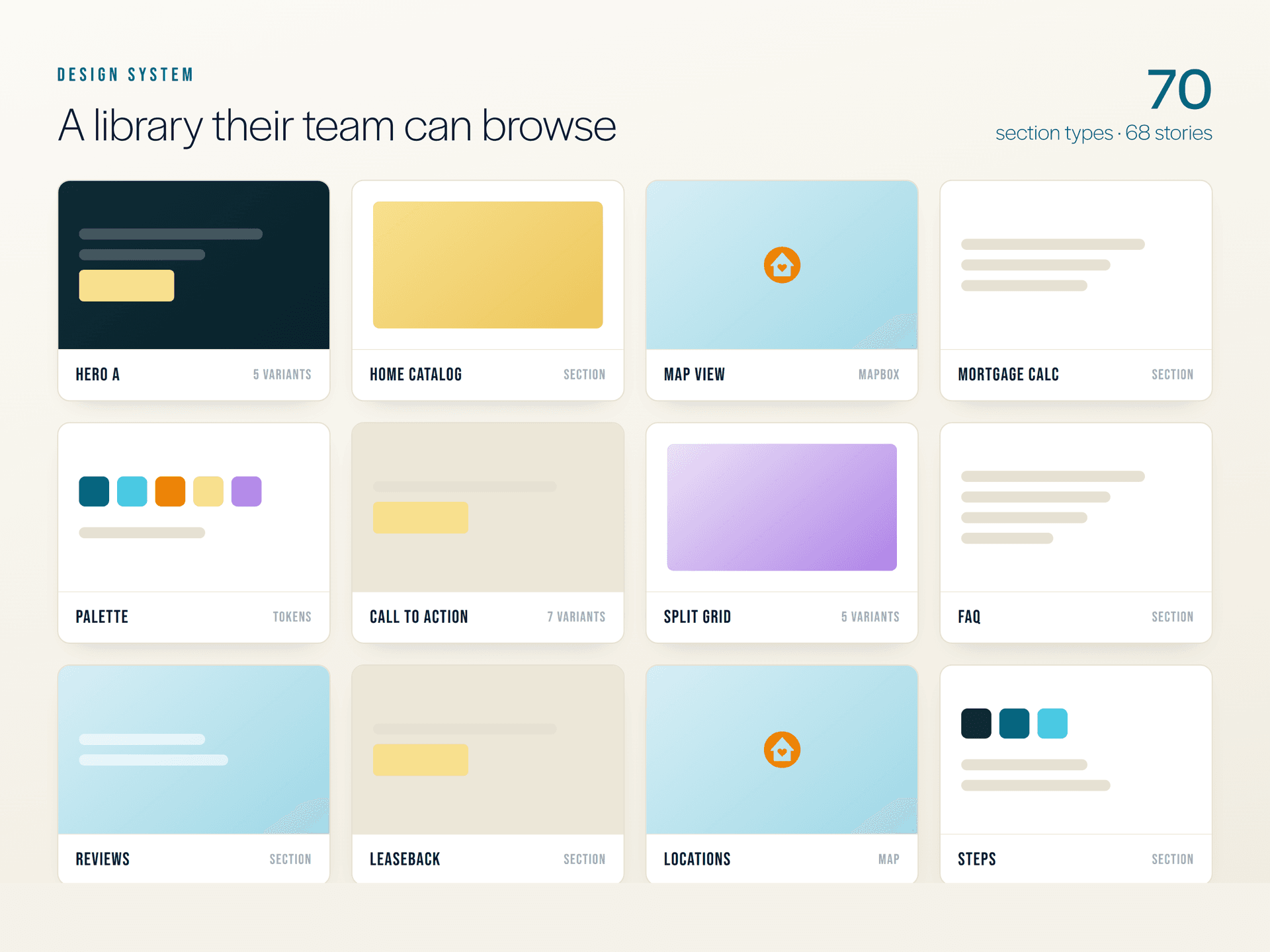
Behind the search bar is a real data model: a 95-field home document tied to communities, home types, models, and sales centres, across 16 content types in all. Buyers filter by community, price, size, bedrooms, and move-in date, and every filter is saved to the URL so a search can be shared or returned to.
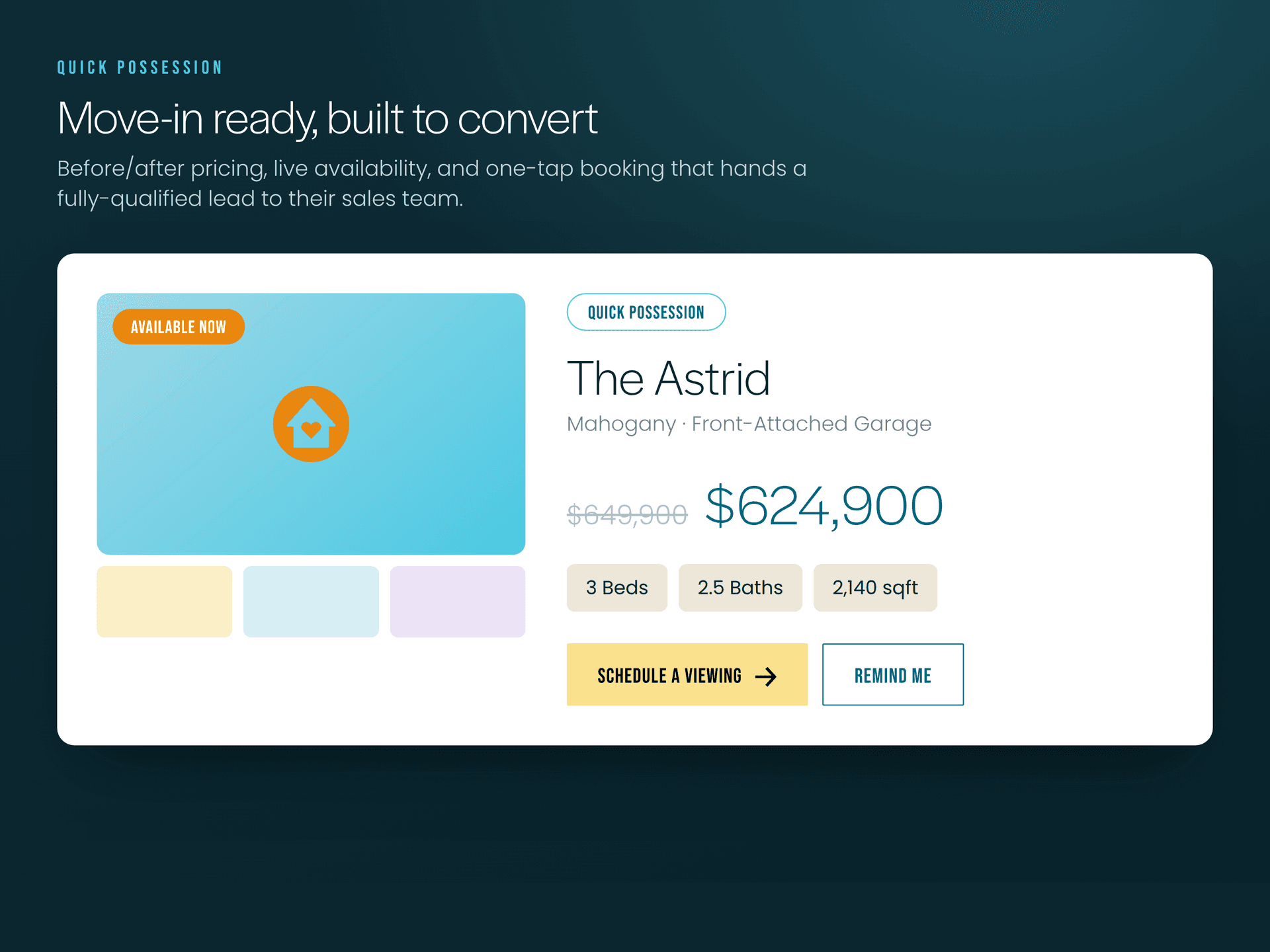
Quick possessions get their own treatment, with live availability, before-and-after pricing, and one-tap booking that hands a fully-qualified lead straight to the sales team.
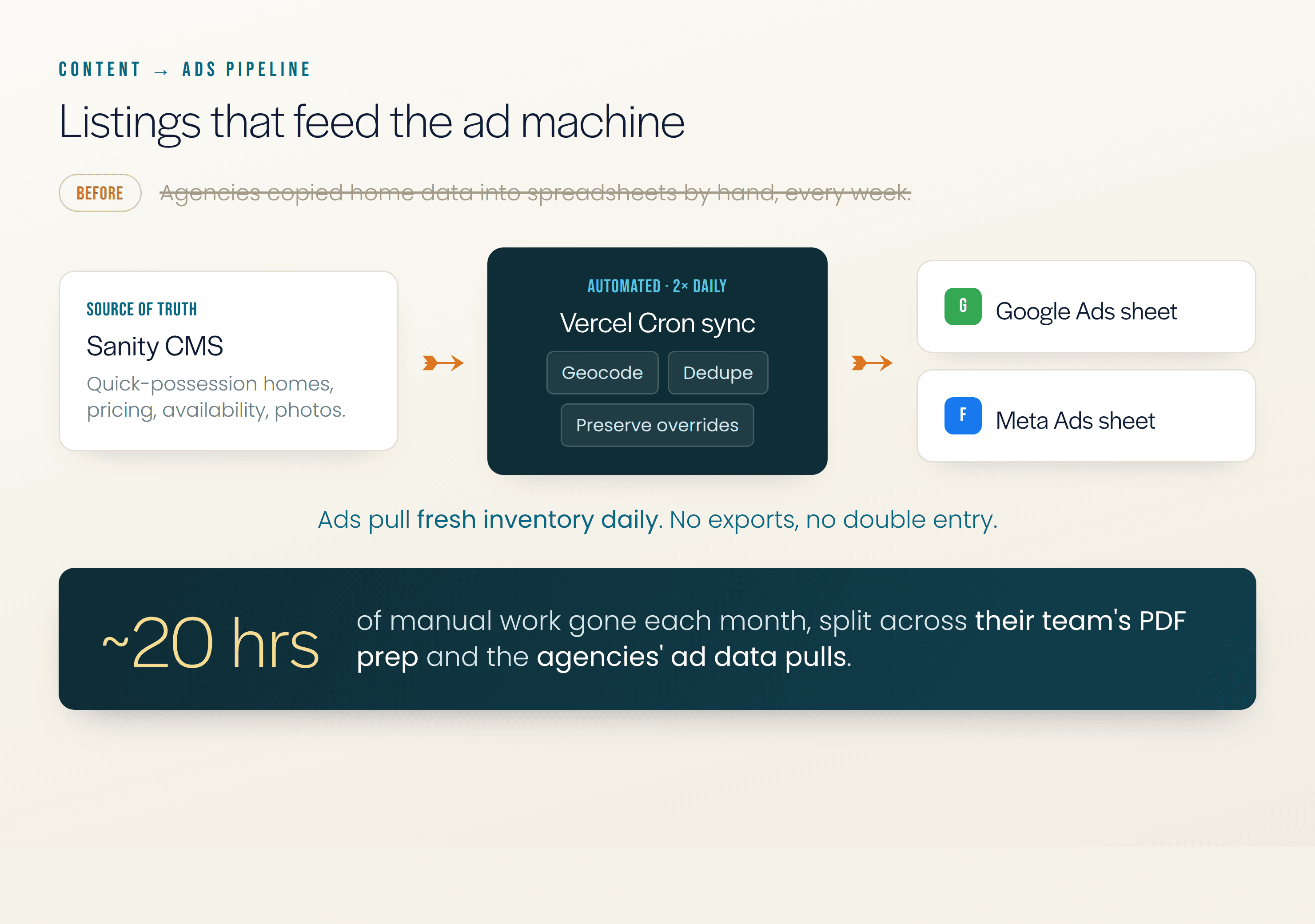
Hopewell's ad agencies used to copy home data into spreadsheets by hand, every week, to keep Google and Meta campaigns current. We automated the whole thing.
Twice a day, a job pulls quick-possession listings from Sanity, geocodes them, removes duplicates, preserves the columns the agencies edit by hand, and writes clean feeds to both ad platforms. The ads stay current on their own now, with no exports and no double entry.
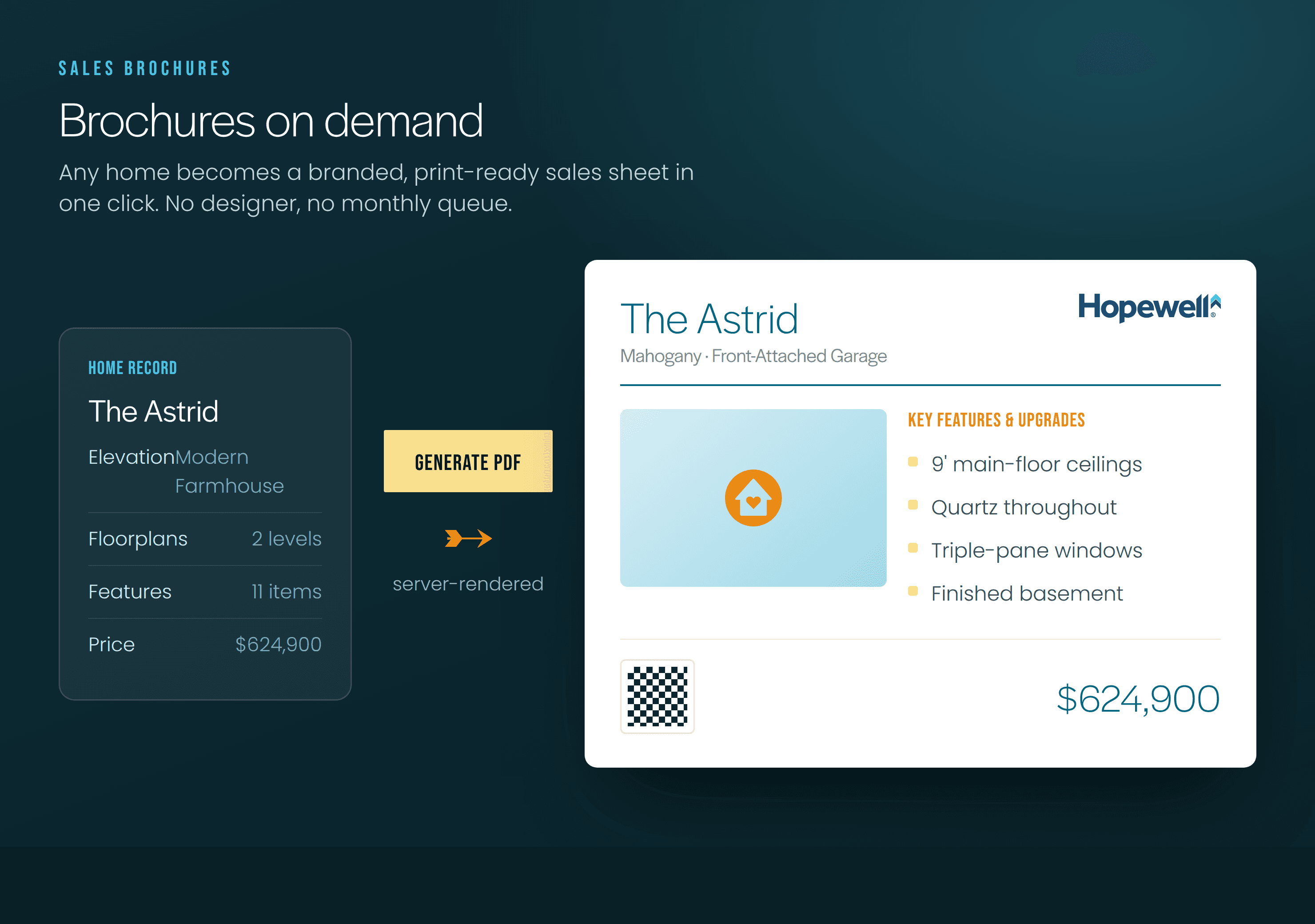
Every quick-possession home needs a sales brochure, and producing them used to mean booking designer hours every month. We built a generator that renders a branded, print-ready PDF for any home on demand.
Elevations, floorplans, features, photos, a QR code, and pricing, all pulled live from the CMS and laid out the moment a salesperson clicks. No designer, no queue, no waiting.
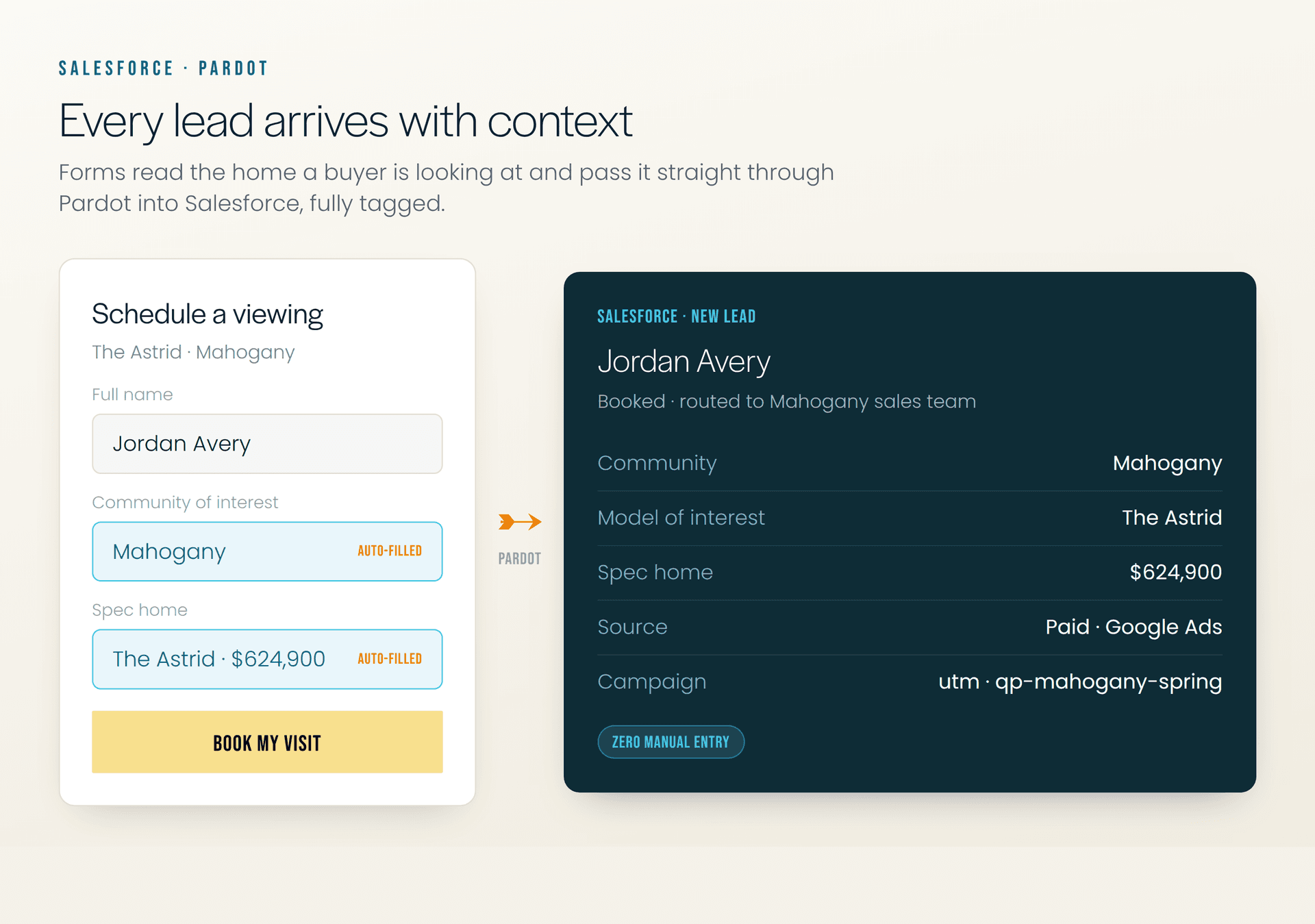
Lead capture isn't a contact form bolted on at the end. Every form on the site reads the home a buyer is looking at and passes that context through Pardot into Salesforce, so a lead arrives already tagged with the community, the model, the price, and the campaign that brought them in.
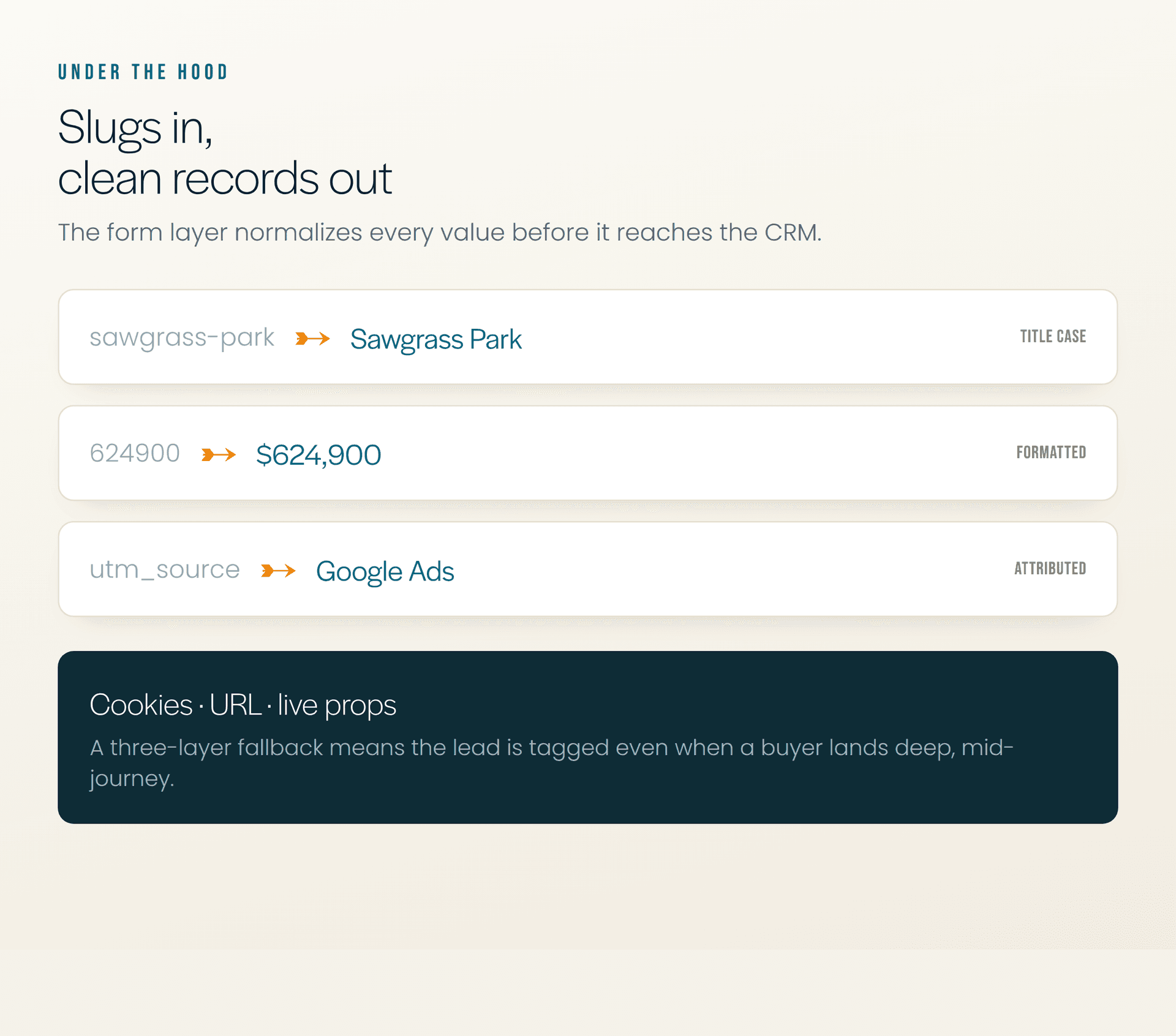
Under the hood the form layer normalizes everything: slugs become clean names, prices get formatted, ad attribution is captured, with a three-layer fallback so the lead is tagged even when someone lands deep in the site mid-journey. The sales team gets context, not data entry.
What the build added up to, a year in.
The platform is Hopewell's, owned outright, documented, and ready for more. New communities, new markets, and new tools all snap onto the same foundation. Daughter shaped how it feels; we made sure it can keep growing for years.

Related: Web development in Calgary