NavigateMENU / 04
More
Elsewhere
Website Design
Website Development
Software Development
Pain Connect is the Chronic Pain Network's national platform for connecting Canadians to pain research. It is a website and a working micro application: a searchable directory of studies, a database that matches people to them, an admin portal, and the email flows that tie it all together.
Built for McMaster University's Chronic Pain Network, so that the people who live with pain have a say in the research that shapes their care.

Roughly 7.6 million Canadians live with chronic pain. That is about one in five people, and the number is climbing. Yet the people who know the most about living with pain are often the last ones invited into the research that shapes their care.
The Chronic Pain Network is one of five chronic disease networks funded by the Canadian Institutes of Health Research, hosted at McMaster University. Its mission is to change the way pain is managed in Canada. Pain Connect is how it does that in public: a national platform where people living with pain and the researchers who need them can finally find each other.
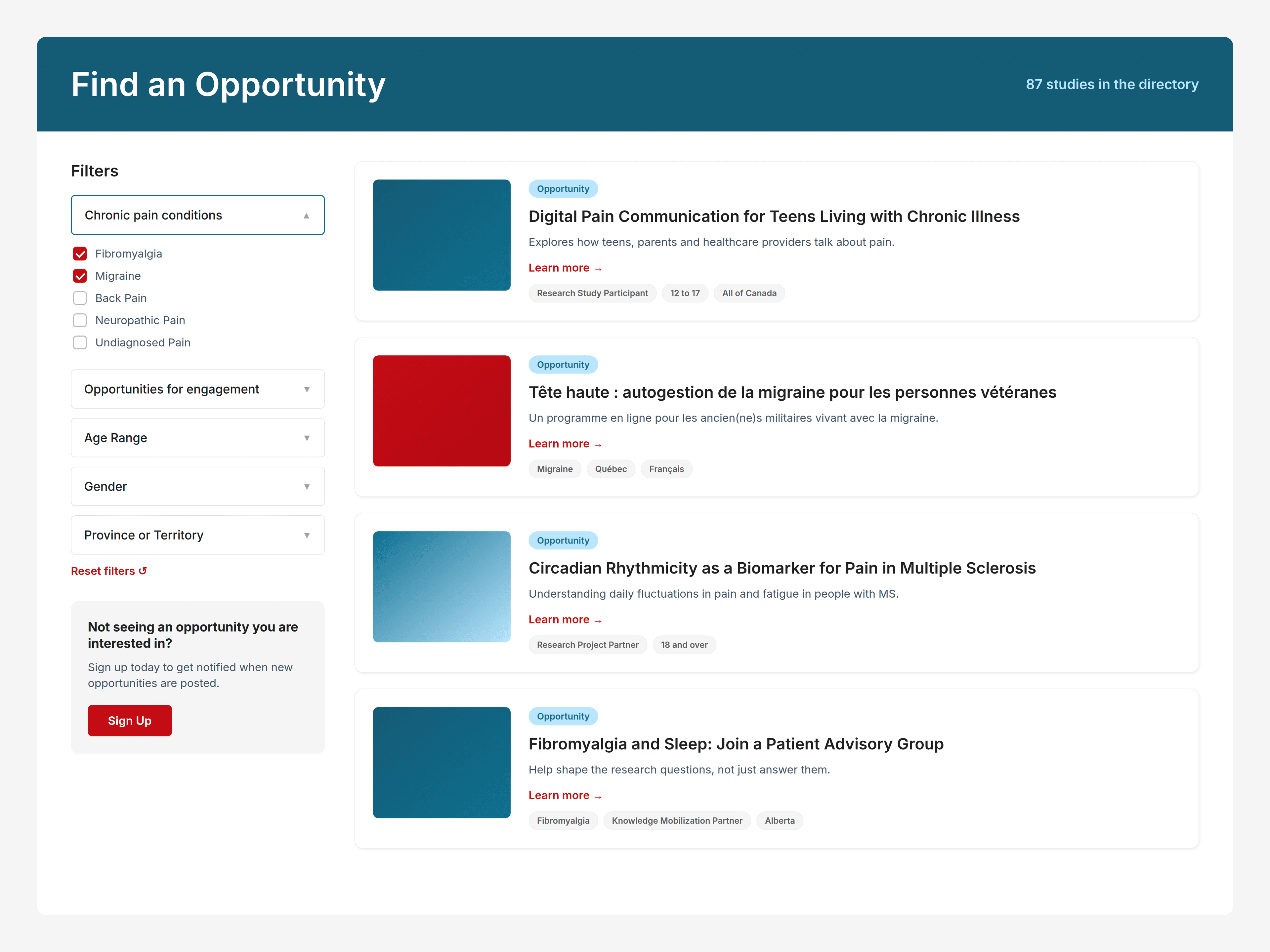
Most of this sector gets visibility websites. Pain Connect needed to be a working tool.
Find an Opportunity is the heart of it. Every study in the catalog can be filtered by the condition someone lives with, the way they want to be involved, their age and their province, in English or in French.
McMaster came to us with brand standards. We built everything around them: the site map, the UX and UI, support on the content, and then the platform underneath it.
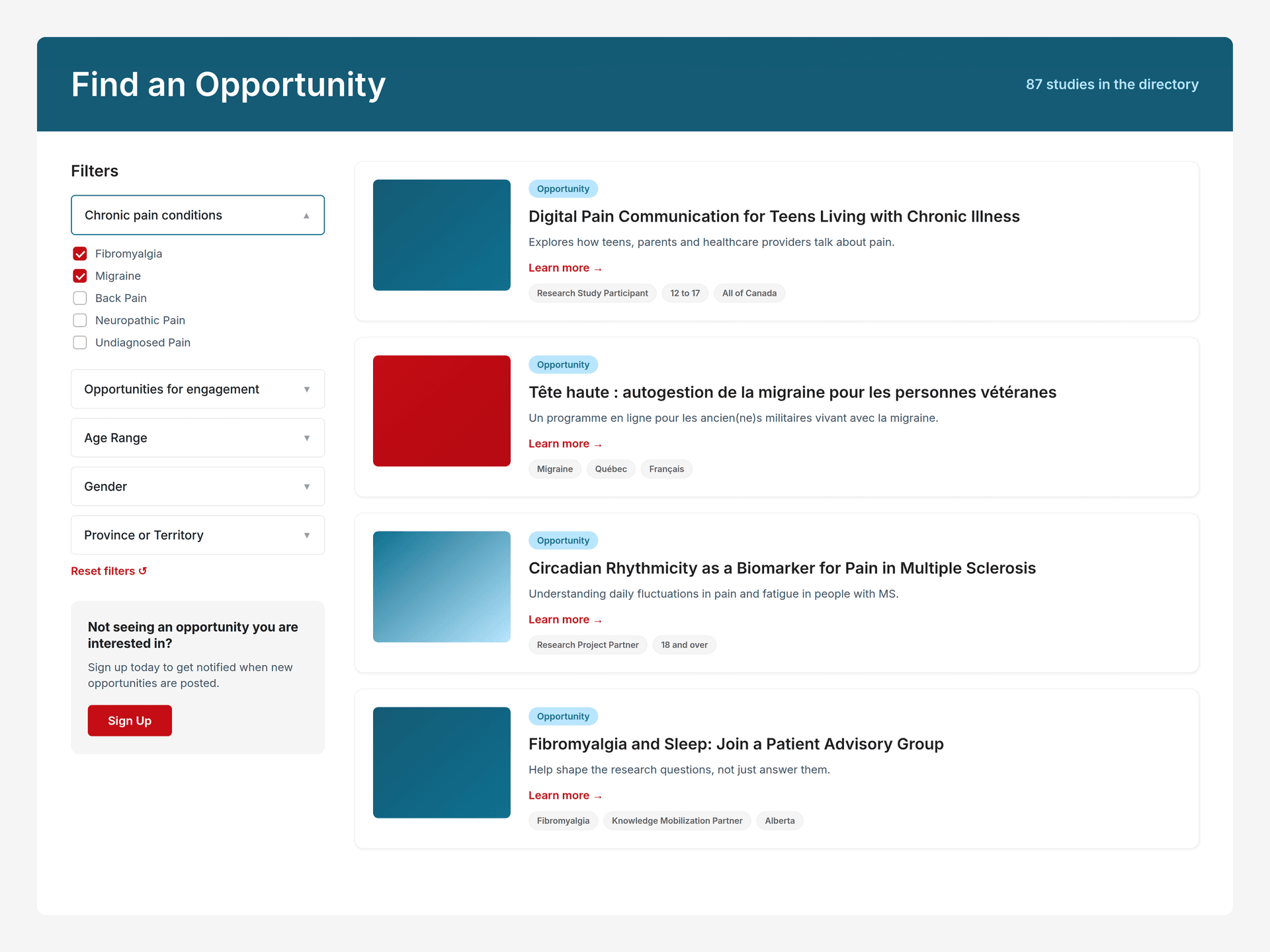
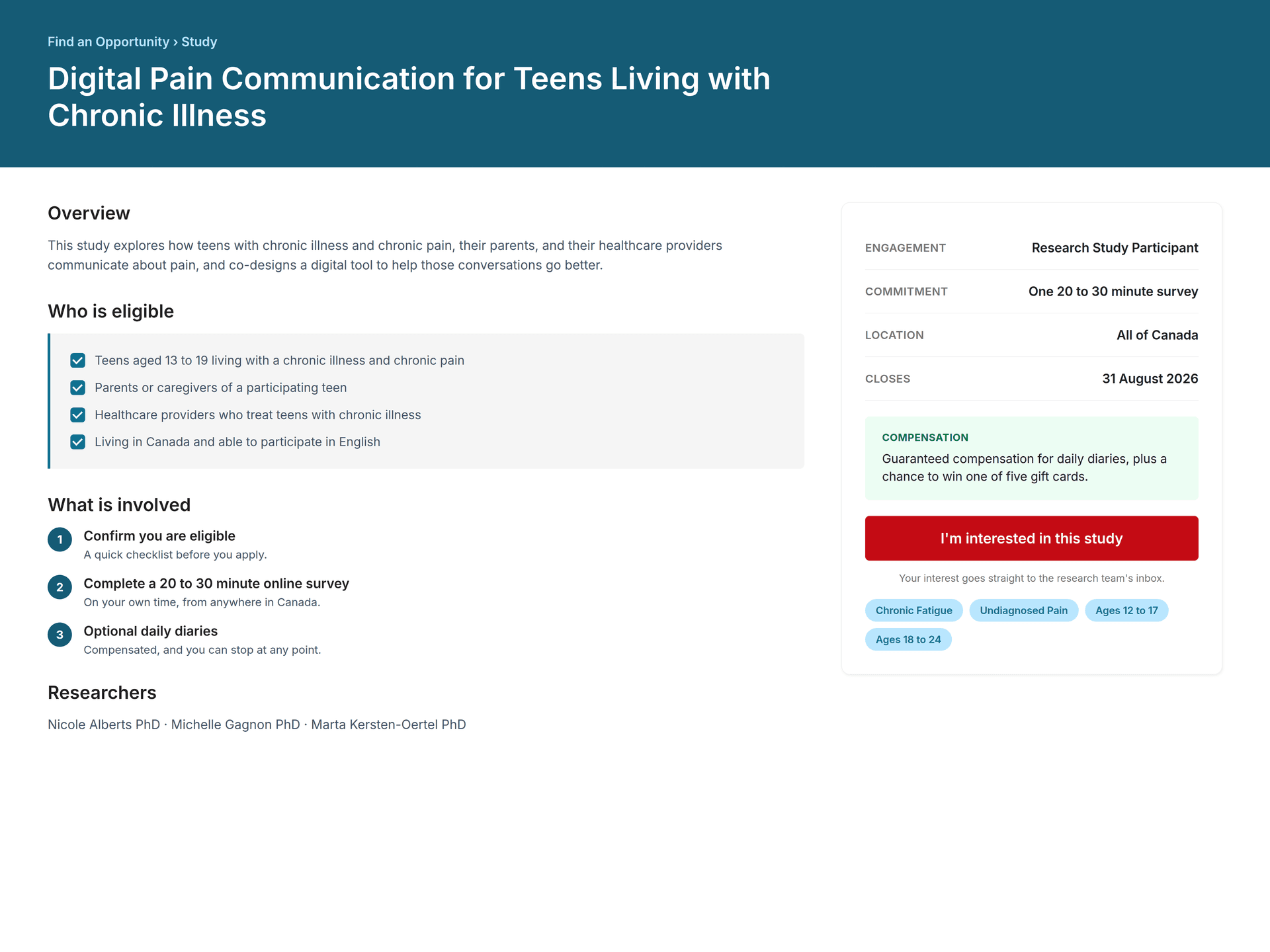
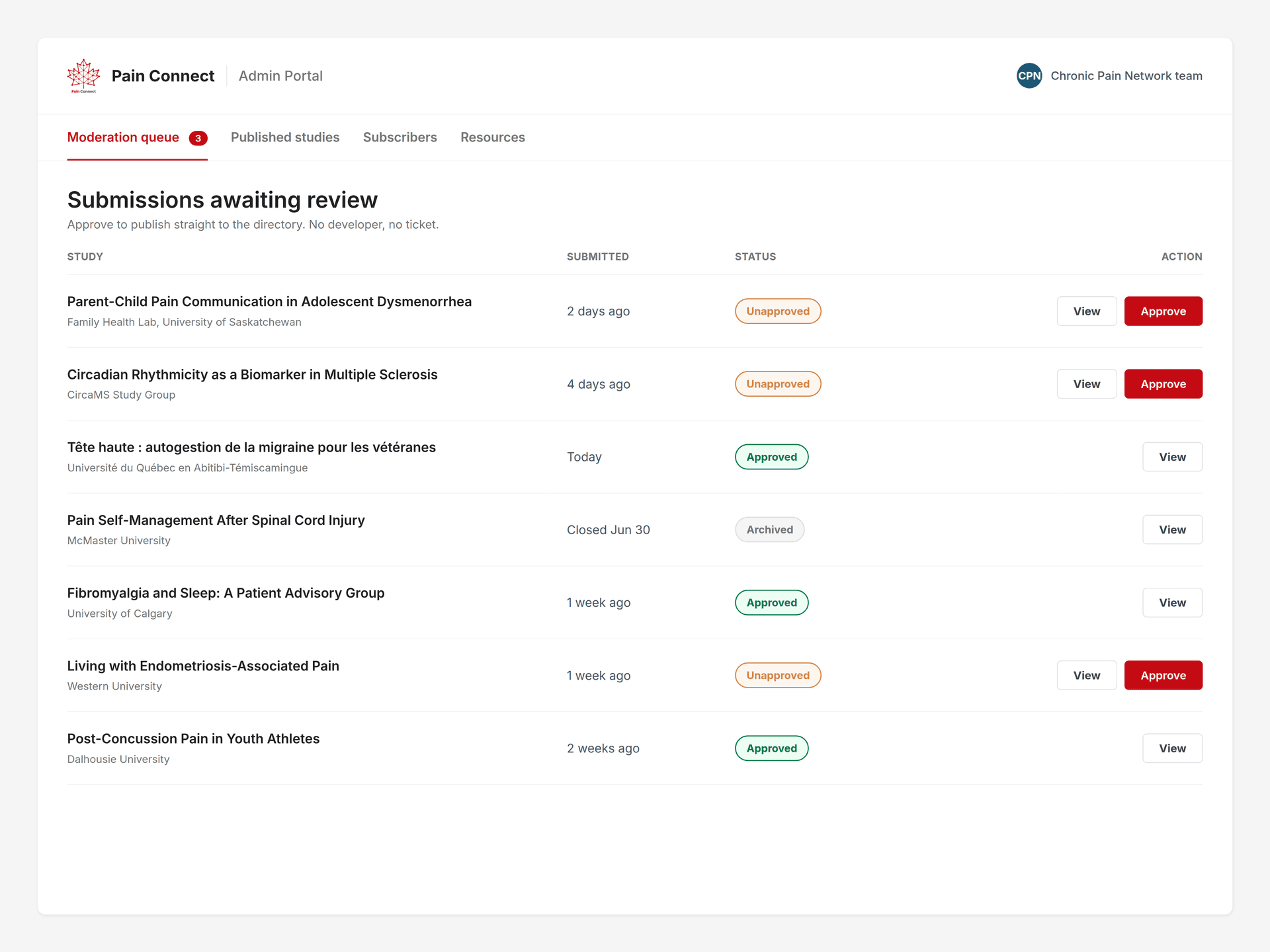
A researcher fills in the intake form and the submission lands in an admin portal we built for the Pain Connect team. They read it, check it, and approve it. The listing goes live in the directory with no developer and no ticket in between.
Before, work like this crawls through inboxes and spreadsheets. Now the team touches the one step that genuinely needs a human, and the platform handles the rest.
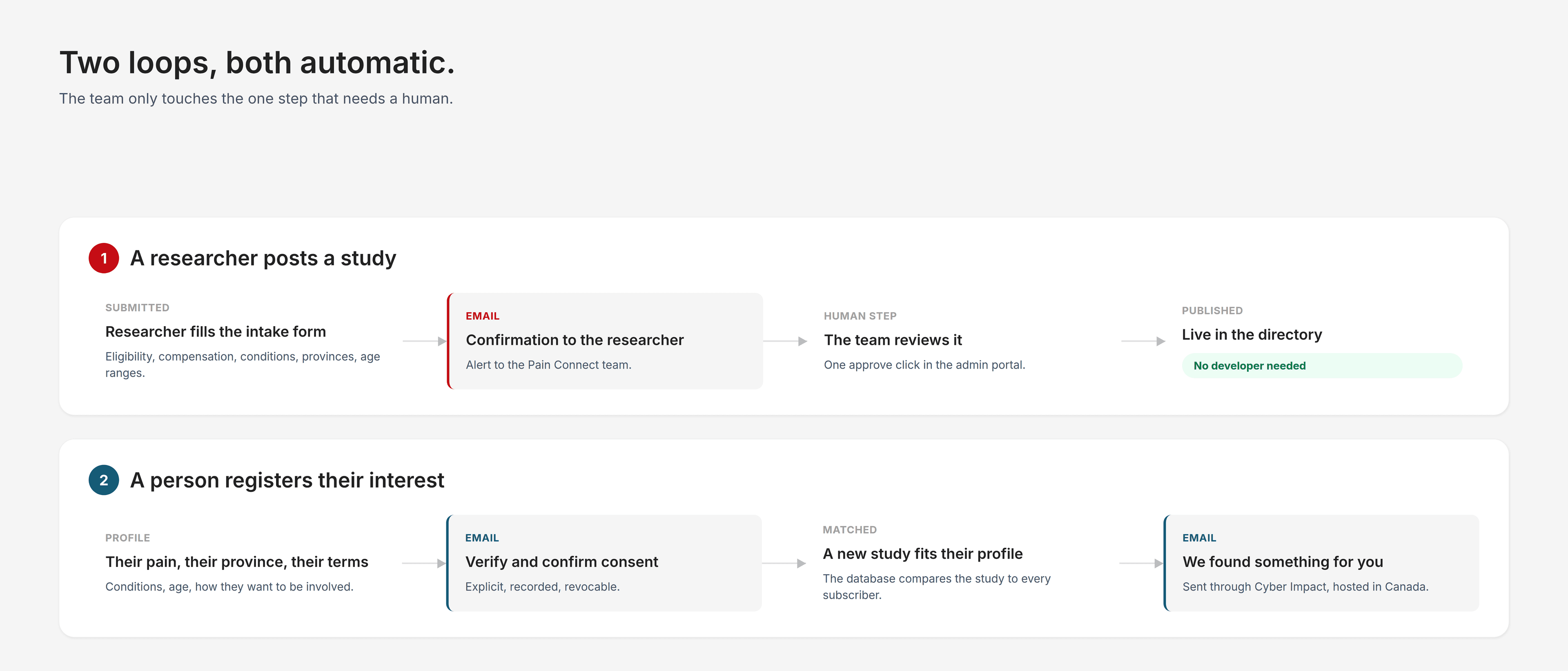
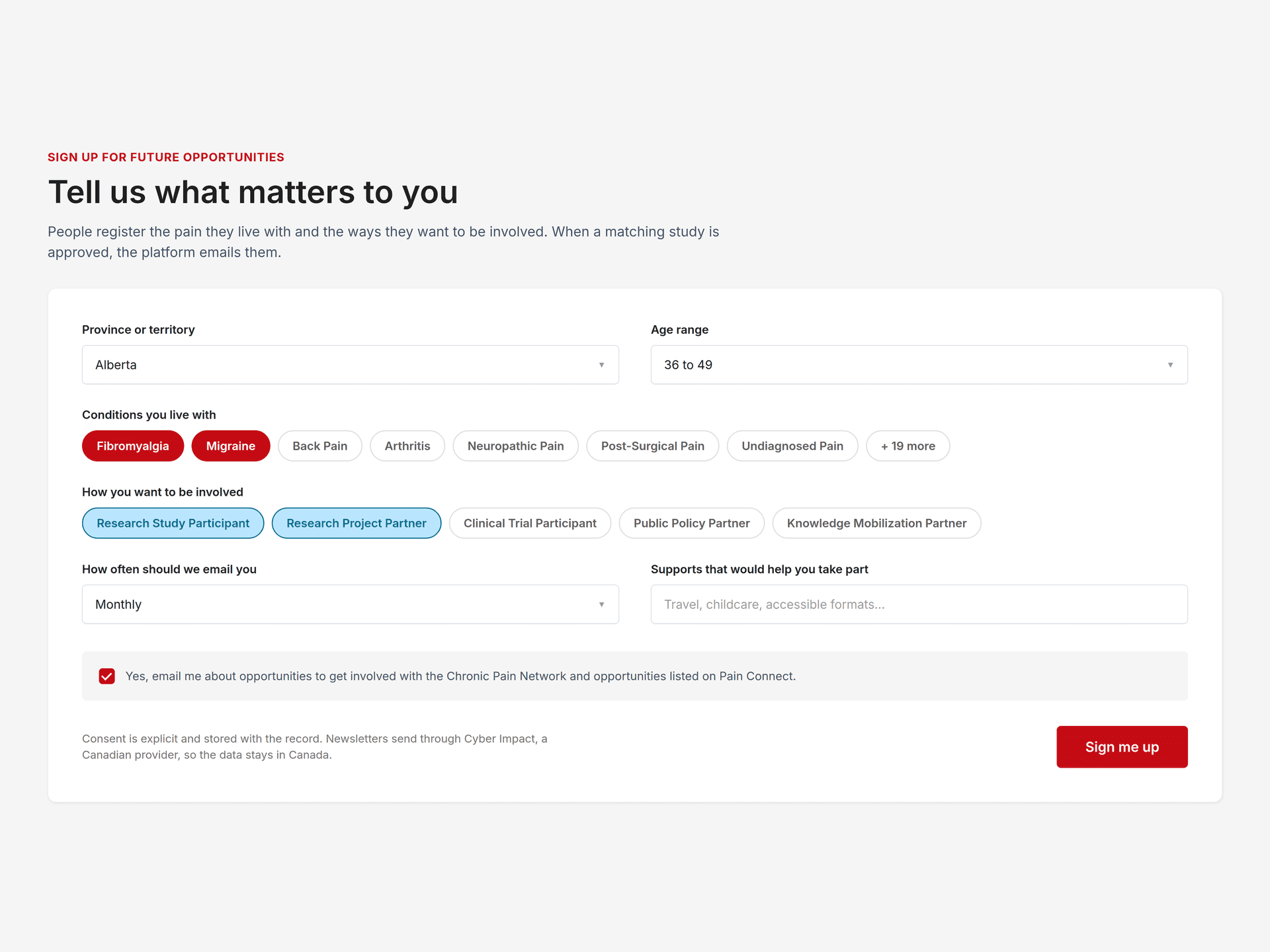
The second loop is the one we are most proud of. If someone does not see a study that fits, they do not leave empty handed. They register the pain they live with, the ways they are willing to be involved, and where they are.
When a matching study is approved, the platform emails them. Consent is explicit, recorded, and theirs to withdraw.
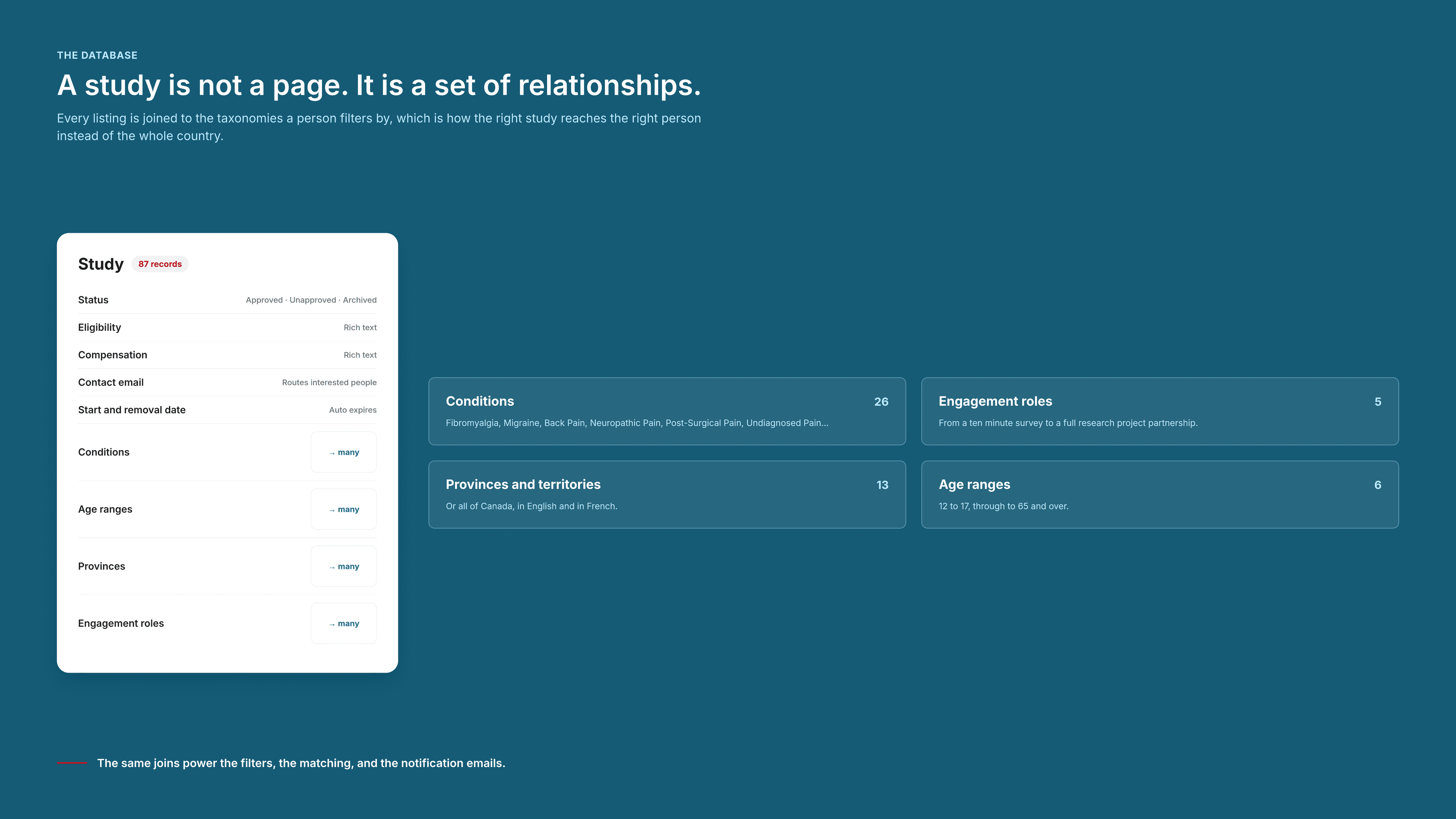
The database is what makes the matching honest. A listing is not a page, it is a record joined to every taxonomy a person filters by: 26 chronic pain conditions, 5 ways to be involved, 6 age bands, and all 13 provinces and territories.
The same joins power the filters, the matching and the notification emails. Build that relationship model properly once and everything downstream gets easier.
We are not going to invent engagement numbers for a young platform. These are the numbers that made it worth building.
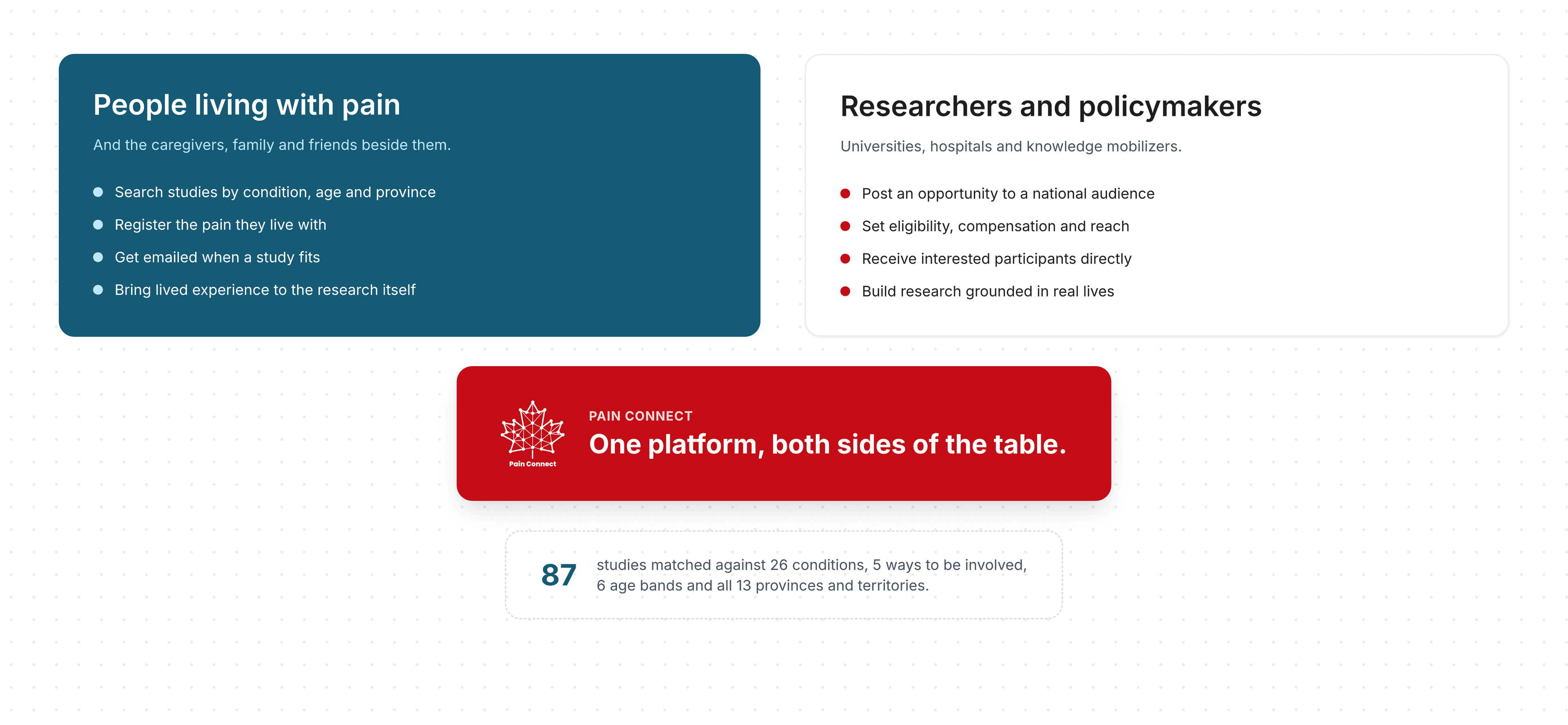
What makes Pain Connect work is that both sides need each other. Researchers reach an audience they could never assemble alone. People living with pain get a say in the work that decides how their pain is treated.
The platform is just the table they meet at.
We keep coming back to this space on purpose. Pain BC, Pain Canada, the University of Calgary, and now McMaster's Chronic Pain Network, alongside teams like CCASA, Help for Dementia and PCNA.
Non-profits and research networks are usually handed either a pretty brochure they cannot maintain or a system they cannot afford. We would rather build them real infrastructure, on budget, and then leave it in their hands. This one helps people in pain get heard. That is worth doing well.
Pain Connect is live and growing, and we are still building alongside the Chronic Pain Network as the platform expands. No one understands pain better than the people who live with it. This is a place where they get to say so.
Related: Nonprofit website design