NavigateMENU / 04
More
Elsewhere
Software Development
The Regional District of Central Kootenay was paying enterprise prices for a proprietary engagement platform they had outgrown. We rebuilt it as a lean, bespoke WordPress application, cleaner, faster, and theirs to keep, and cut their annual running costs by more than 95%.
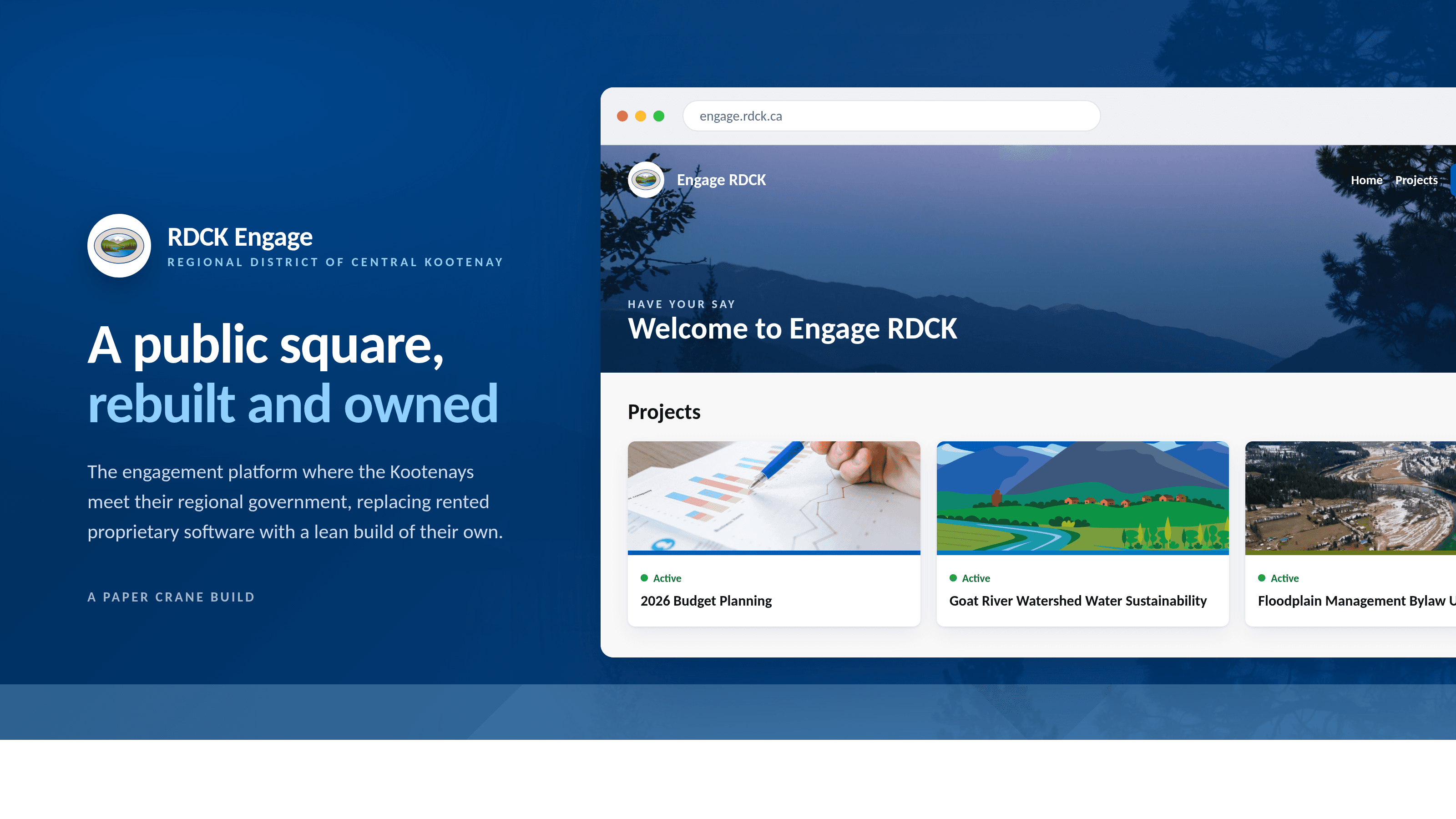
Not long after we rebuilt the RDCK's main website, they came back with a different problem. The Regional District of Central Kootenay runs real public consultations, on budgets, watersheds, parks and floodplain bylaws, and they were running them on a proprietary engagement platform that cost a small fortune every year.
The software did far more than they needed. It was a sprawling suite of modules, most of them unused, billed at a price that did not flex. RDCK was paying enterprise rates to run a handful of features. So they asked us a simple question: could we build the part they actually used, for a fraction of the cost, and have them own it outright?
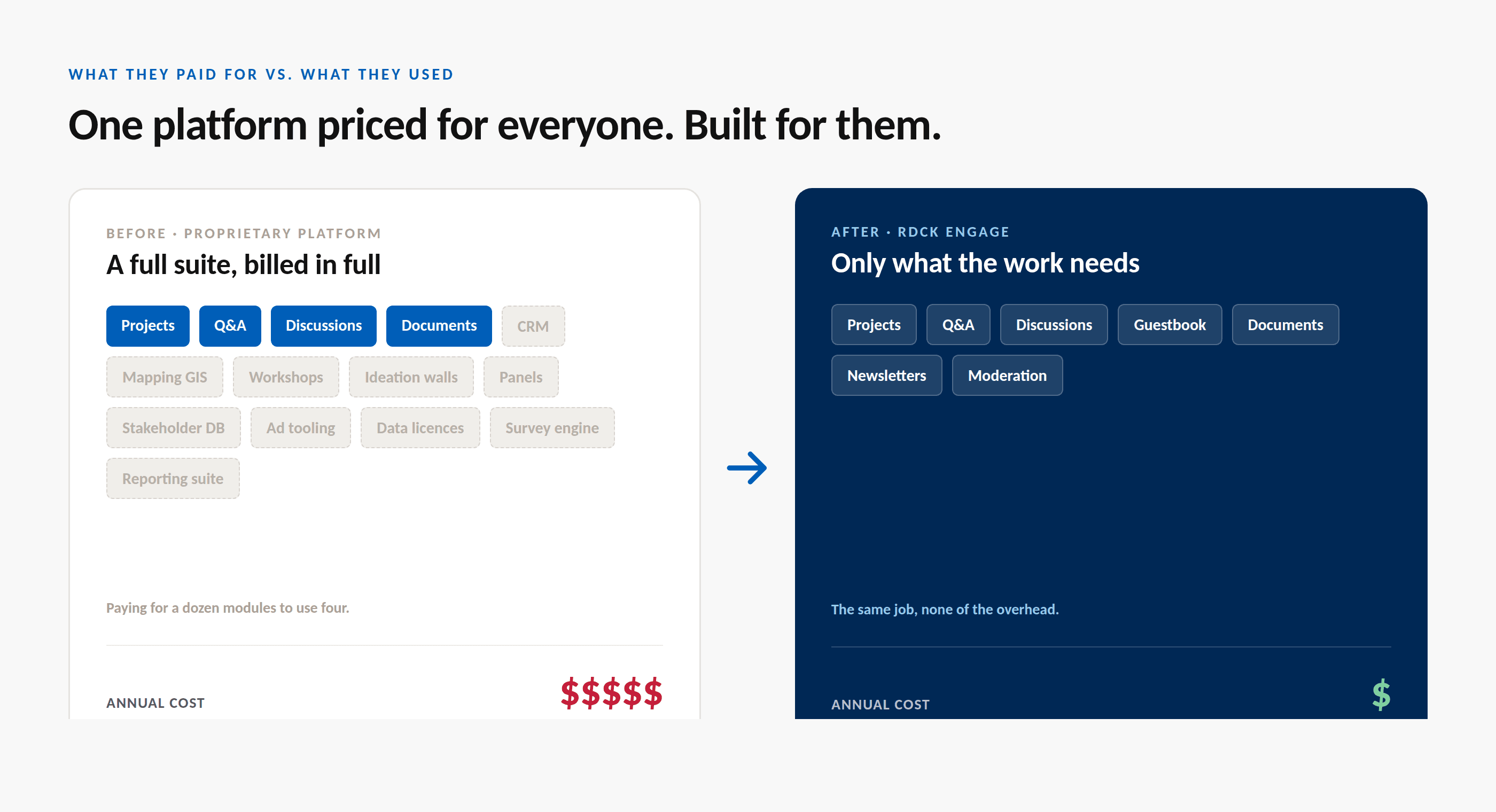
The incumbent platform bundled everything a big-city engagement team might want: CRM, mapping, ideation walls, stakeholder databases, ad tooling. RDCK used a small, focused slice of it, projects, discussions, questions, documents and a newsletter, and paid for the whole thing regardless.
It was capable software. It just was not built for a regional district's budget, and it was never going to get cheaper.
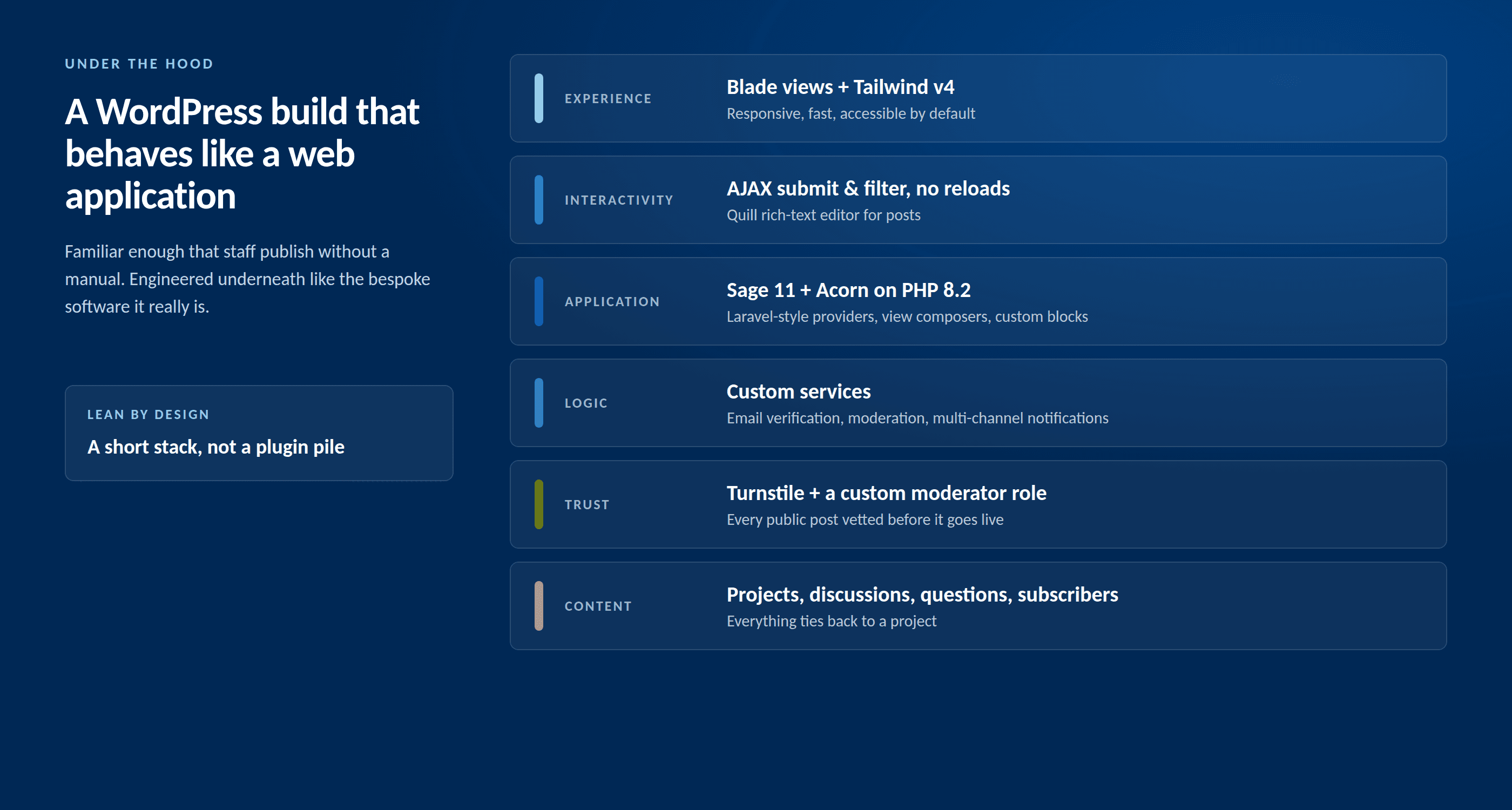
We rebuilt the features they relied on as a bespoke application on a lean WordPress stack, Sage and Acorn on top, custom services underneath. It looks and behaves like modern software, not a template, yet it is familiar enough that staff can publish a new consultation without a manual.
Almost none of it leans on third-party plugins to license or patch. The result is a pseudo web application they host with their own nonprofit hosting partner, own completely, and can run for years without a per-seat invoice in sight.
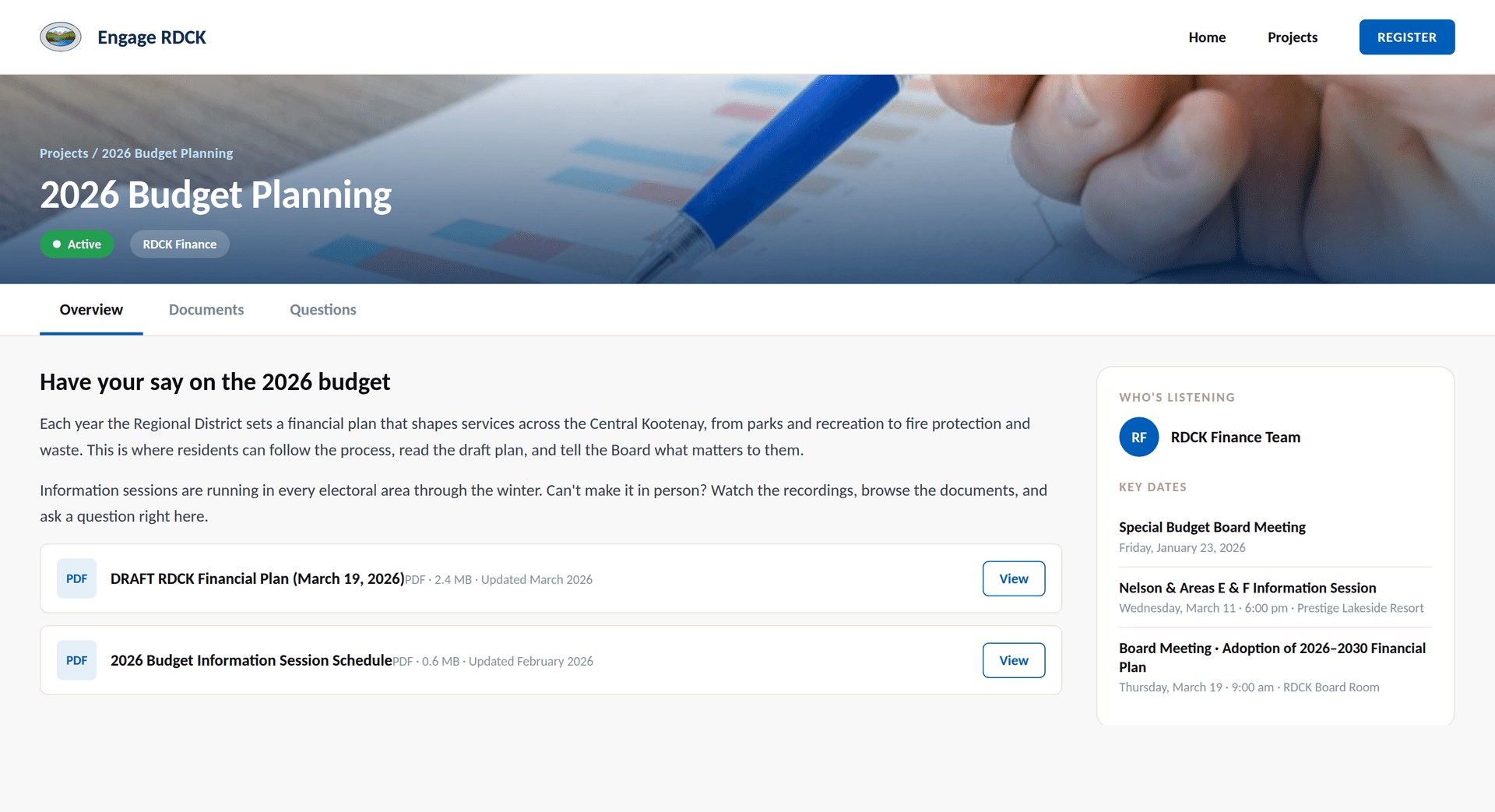
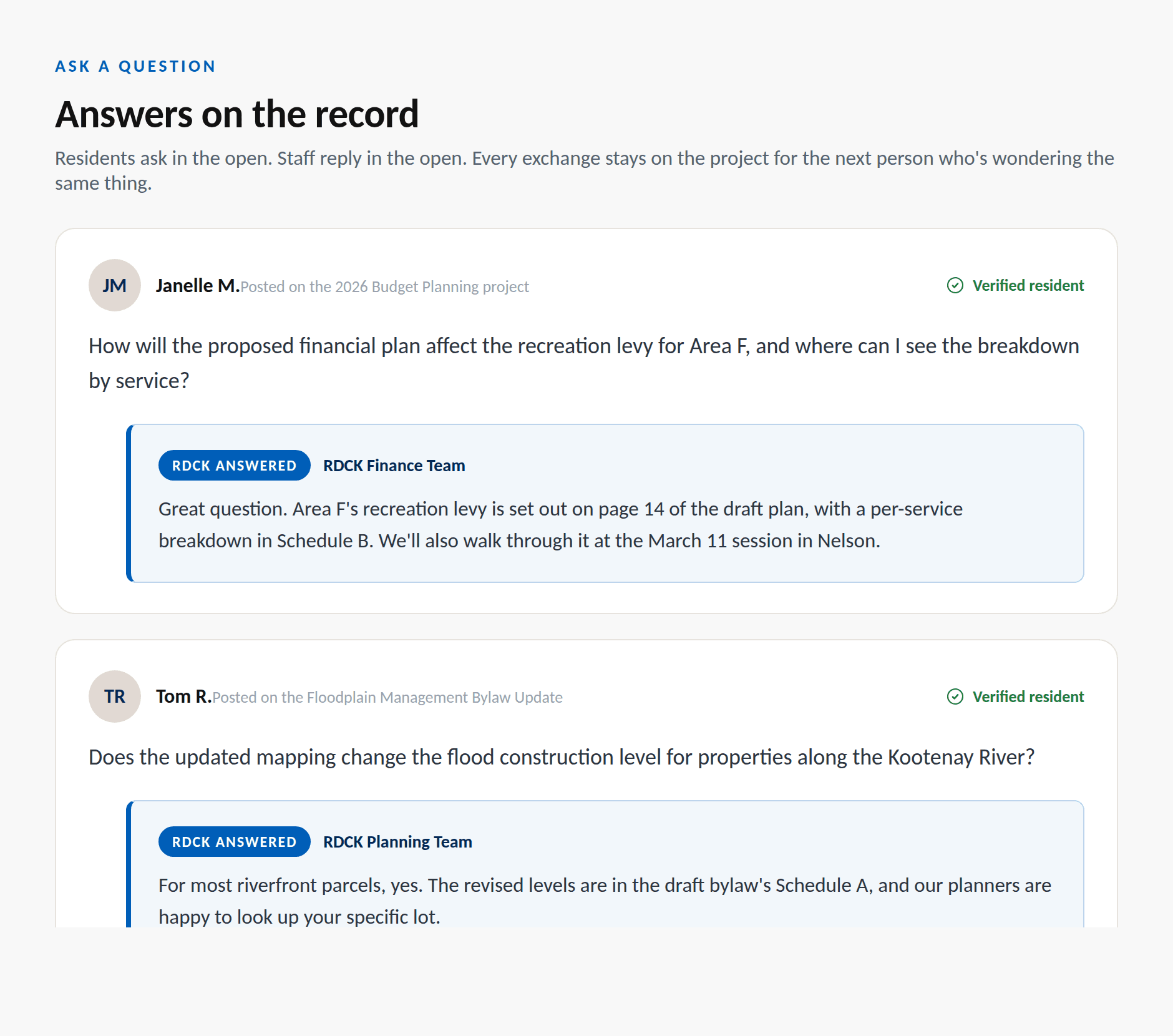
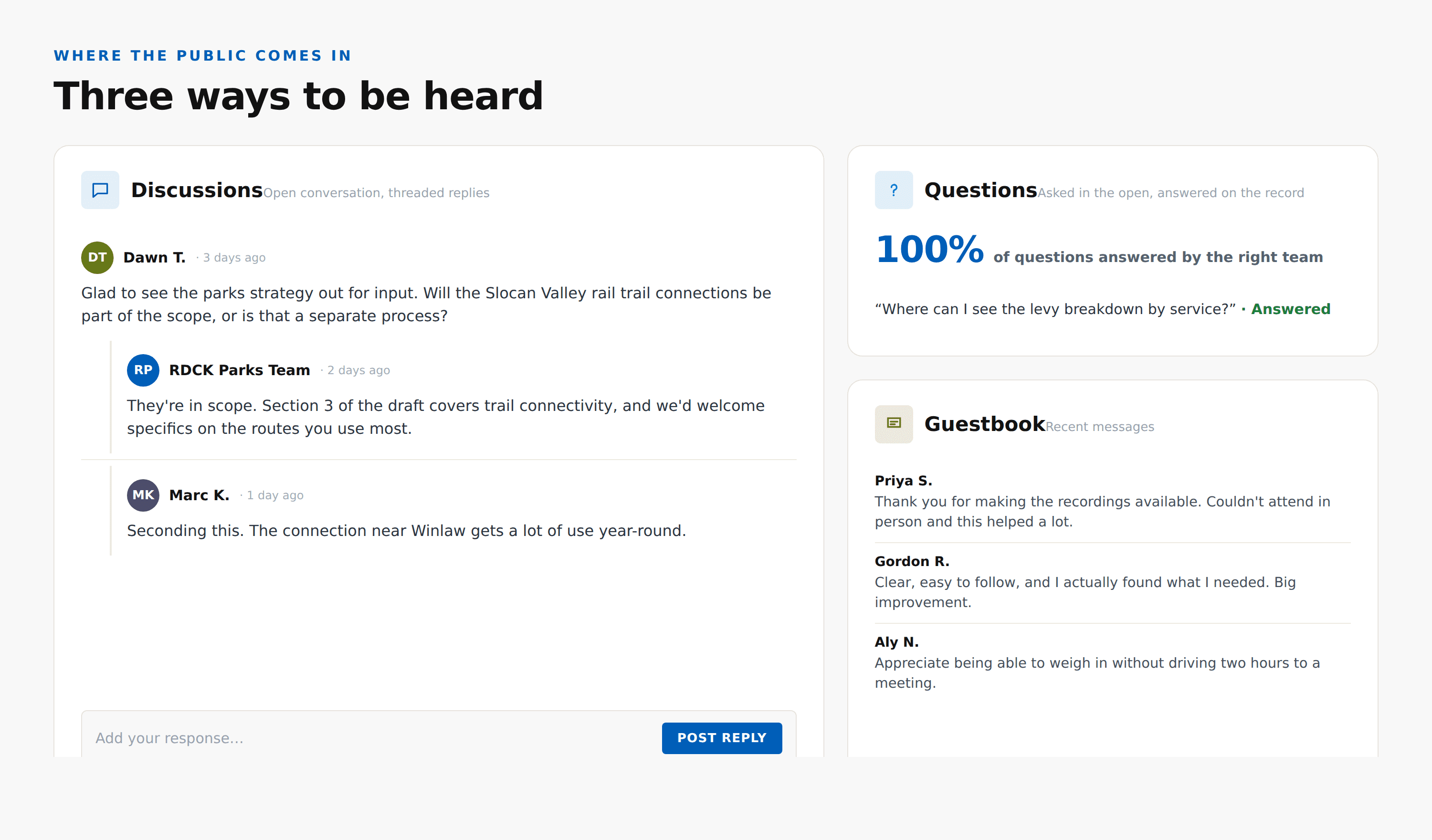
Every project becomes a small hub. Residents can read the plan, download the documents, join a threaded discussion, ask a question, or simply leave a note in the guestbook. Staff reply in the open, and every answer stays on the project for the next person wondering the same thing.
It turns a one-way public notice into an actual conversation, which is the whole point of engagement.
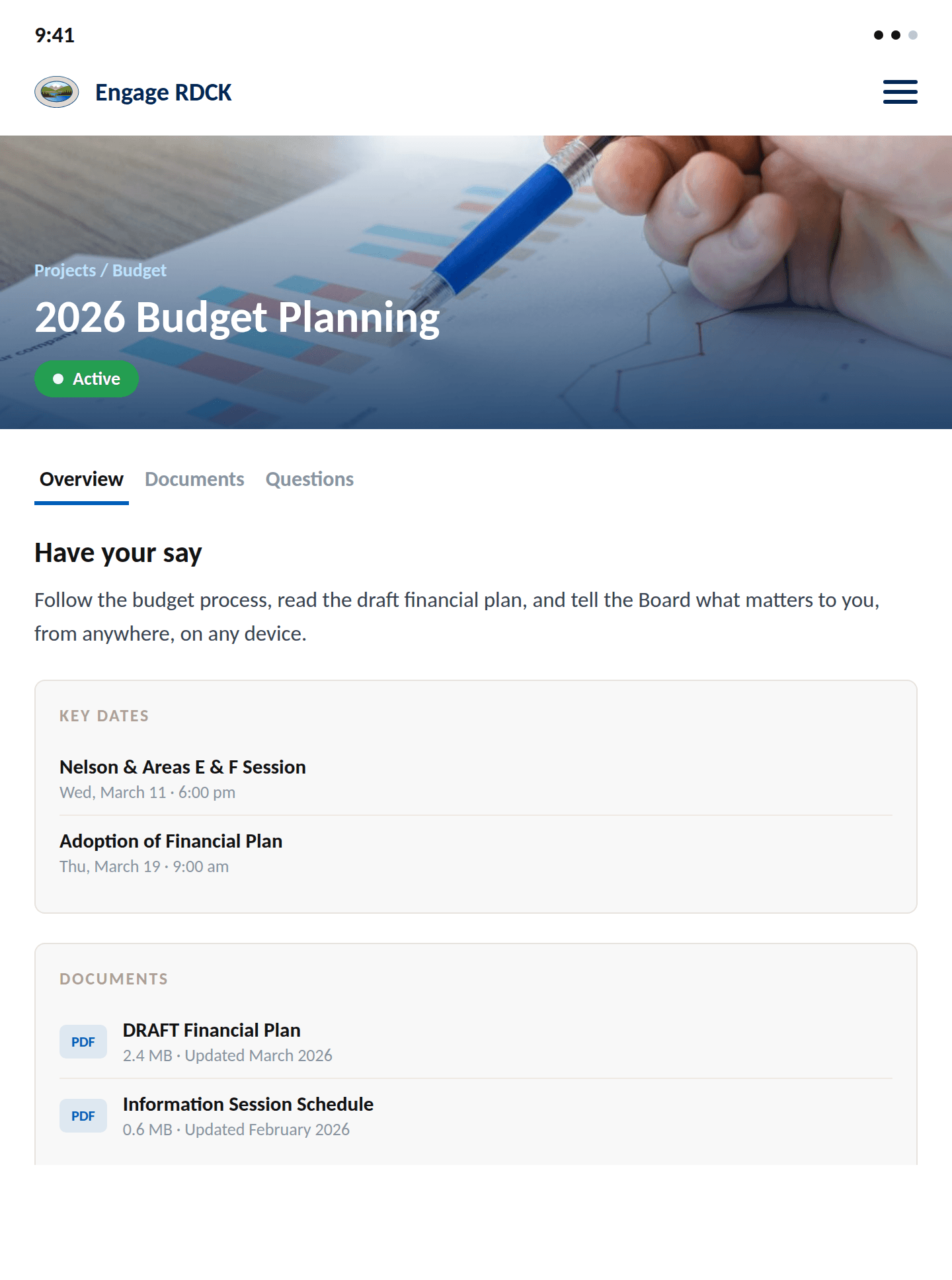
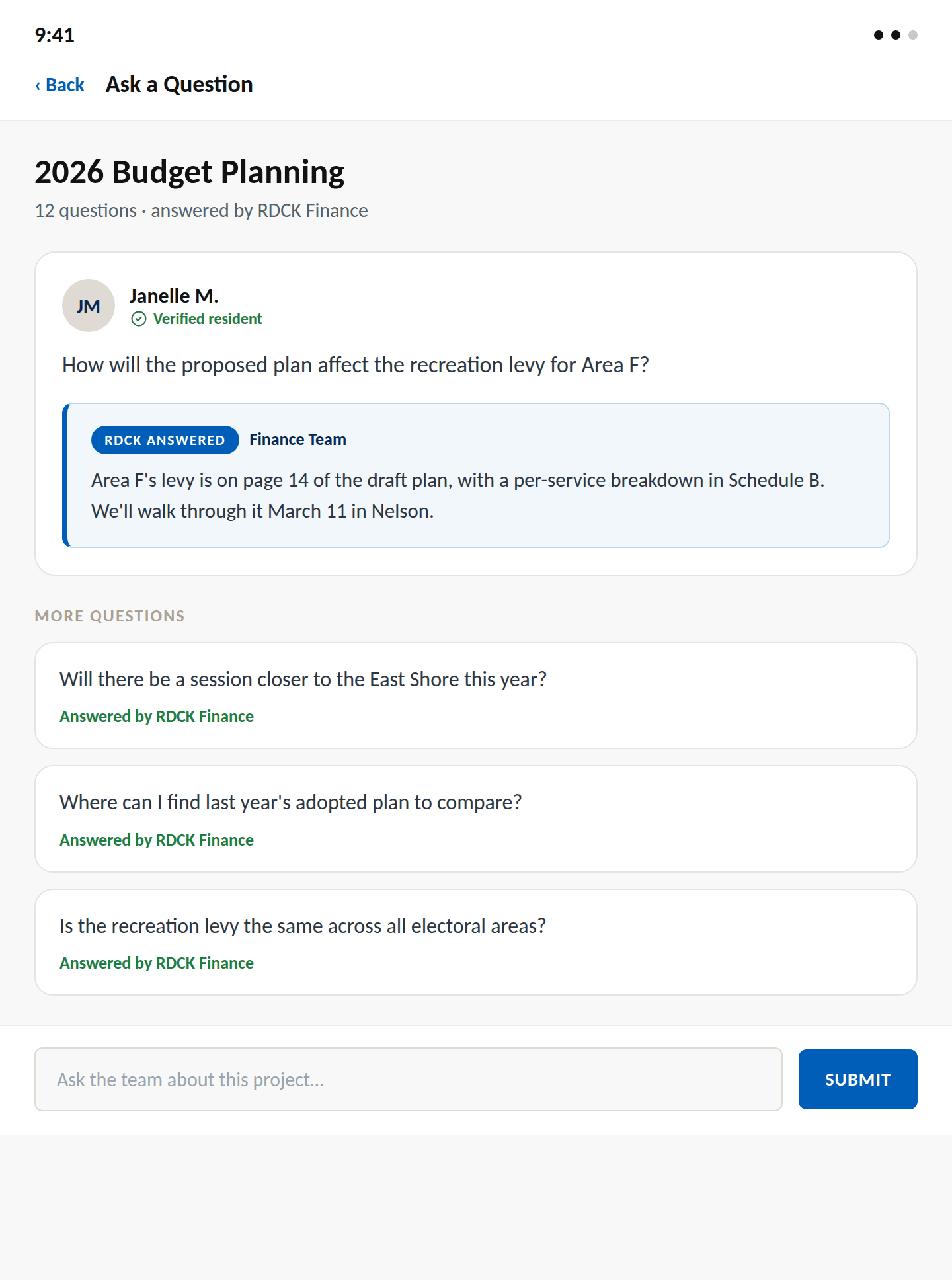
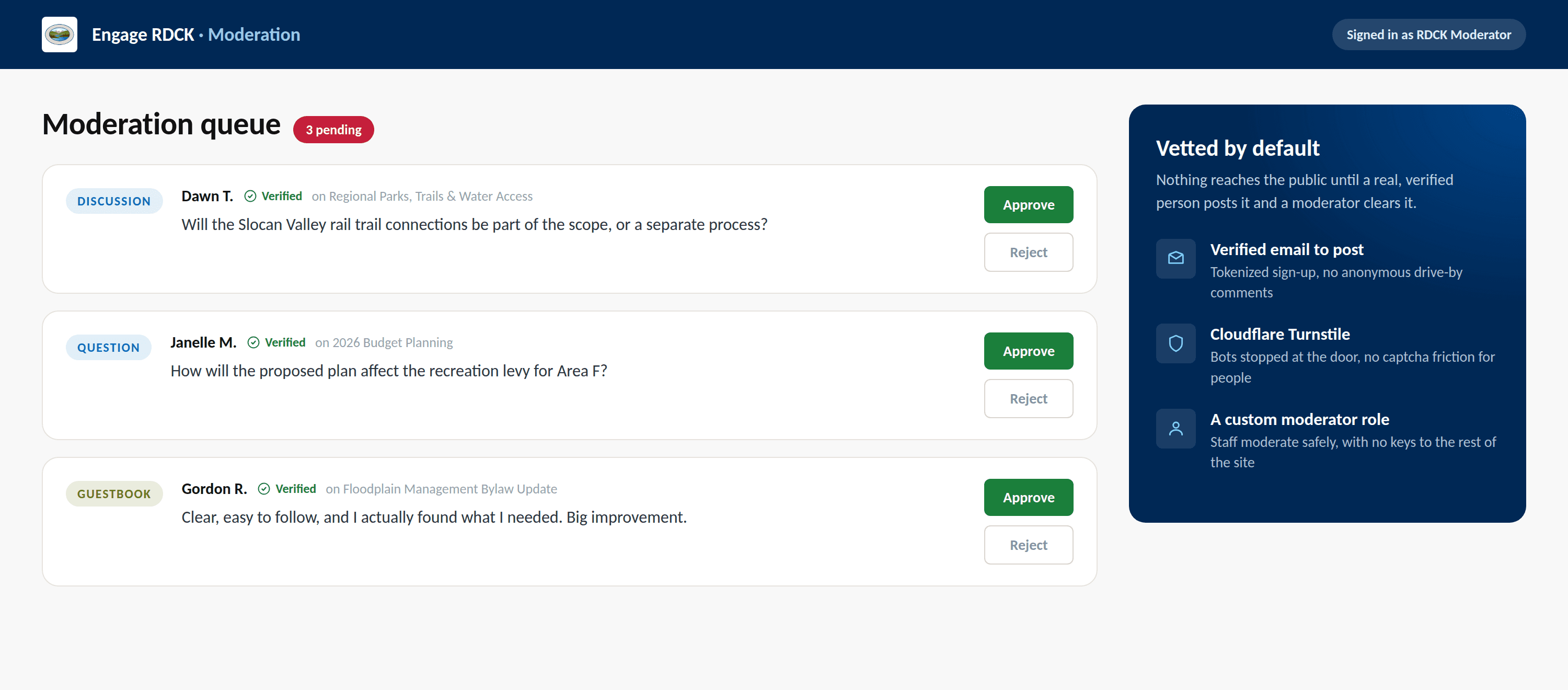
Open does not mean unmoderated. To post, a resident verifies their email, and Cloudflare Turnstile keeps the bots out without making real people solve puzzles. Nothing goes live until a moderator clears it.
We built RDCK staff a custom moderator role for exactly that work, enough to review and approve, with no keys to the rest of the site. Notifications route each submission to the right team, so the people who should be listening always are.
A platform like this lives or dies by how easy it is to keep current, so we spent as much care on the back office as the front.
Publishing a new consultation is a clean, logical flow, and a single project page pulls everything together in one place:
Whoever picks it up, on whatever team, can run it with confidence. That is what keeps a tool like this genuinely useful years after launch.
Real numbers from a year in production.
RDCK Engage has been live for about a year. It has carried dozens of public projects without drama, it is fast, and it has barely needed us since launch. The money that used to leave the region for a software vendor now stays where it does the most good.
That is how we like to build: real, production-grade software our clients own outright, free of per-seat pricing and vendor lock-in, with us on hand whenever they want us. Less spent on licences, more spent on the community.