NavigateMENU / 04
More
Elsewhere
Business Automation
Software Development
An AI parsing pipeline, built when the GPT API was months old, that turned law firm websites into a structured national database and kept it current.
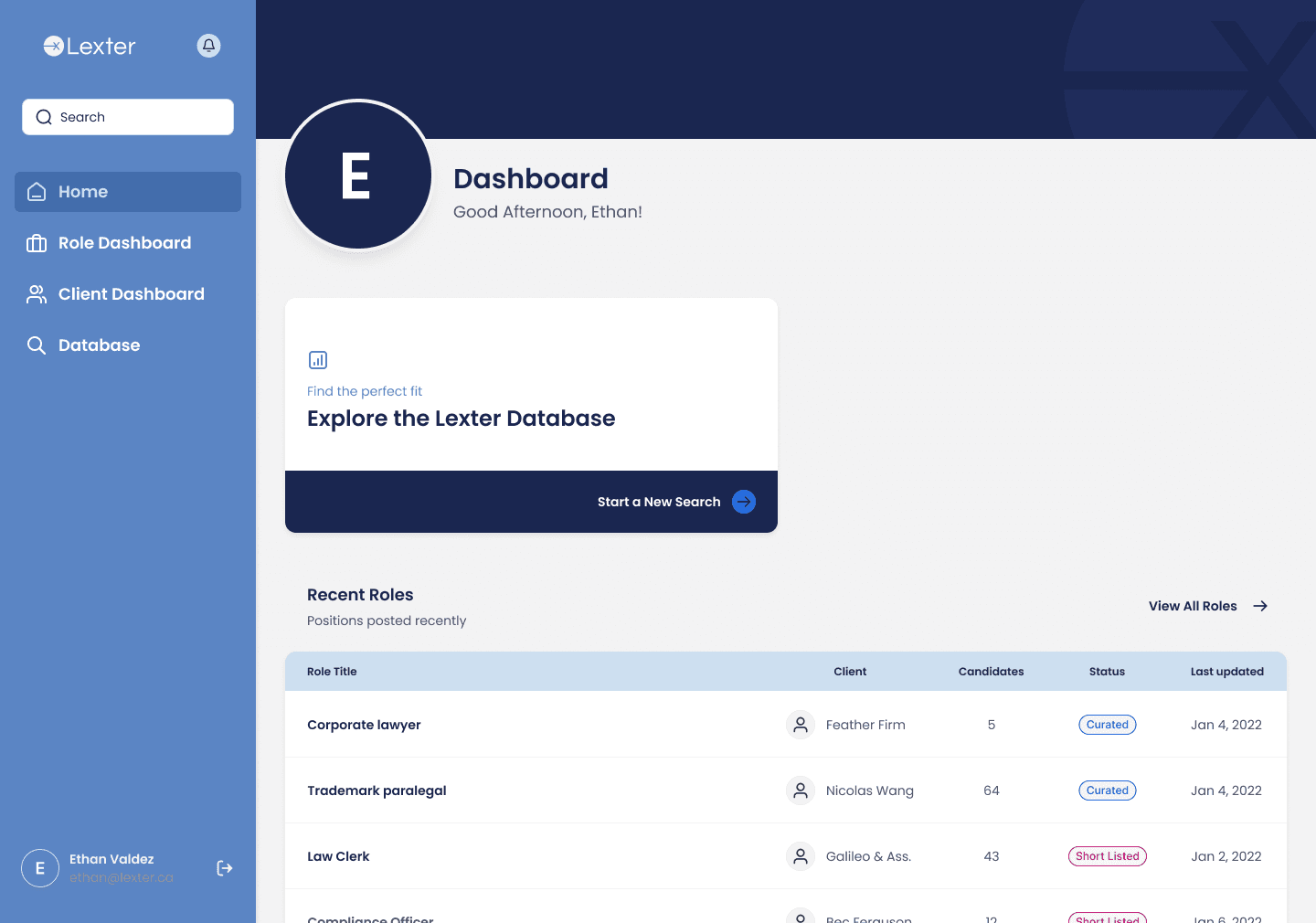
Legal directories in Canada were out of date, incomplete, or both. Firm websites change constantly. People move, make partner, switch practice areas, leave. A database built by hand is wrong the week after it ships, and keeping it right manually costs more than the data is worth.
Lexter wanted a directory that was accurate on the day you searched it, covered the country, and held information nobody else had. That is a data engineering problem before it is a product problem.
This was the early days of the GPT API, before most of the tooling that exists now. We built a parsing pipeline that read law firm websites and turned unstructured pages into structured records: names, titles, practice areas, credentials, bios, locations.
The parsing was never the hard part. The hard part was doing it reliably at national scale, handling every way a firm can lay out a bio page, and knowing when the model had produced something wrong. Validation ran at each stage so bad extractions were caught rather than written into the database.
The pipeline ran millions of times and kept running, because a directory that is only correct at launch is not worth much.
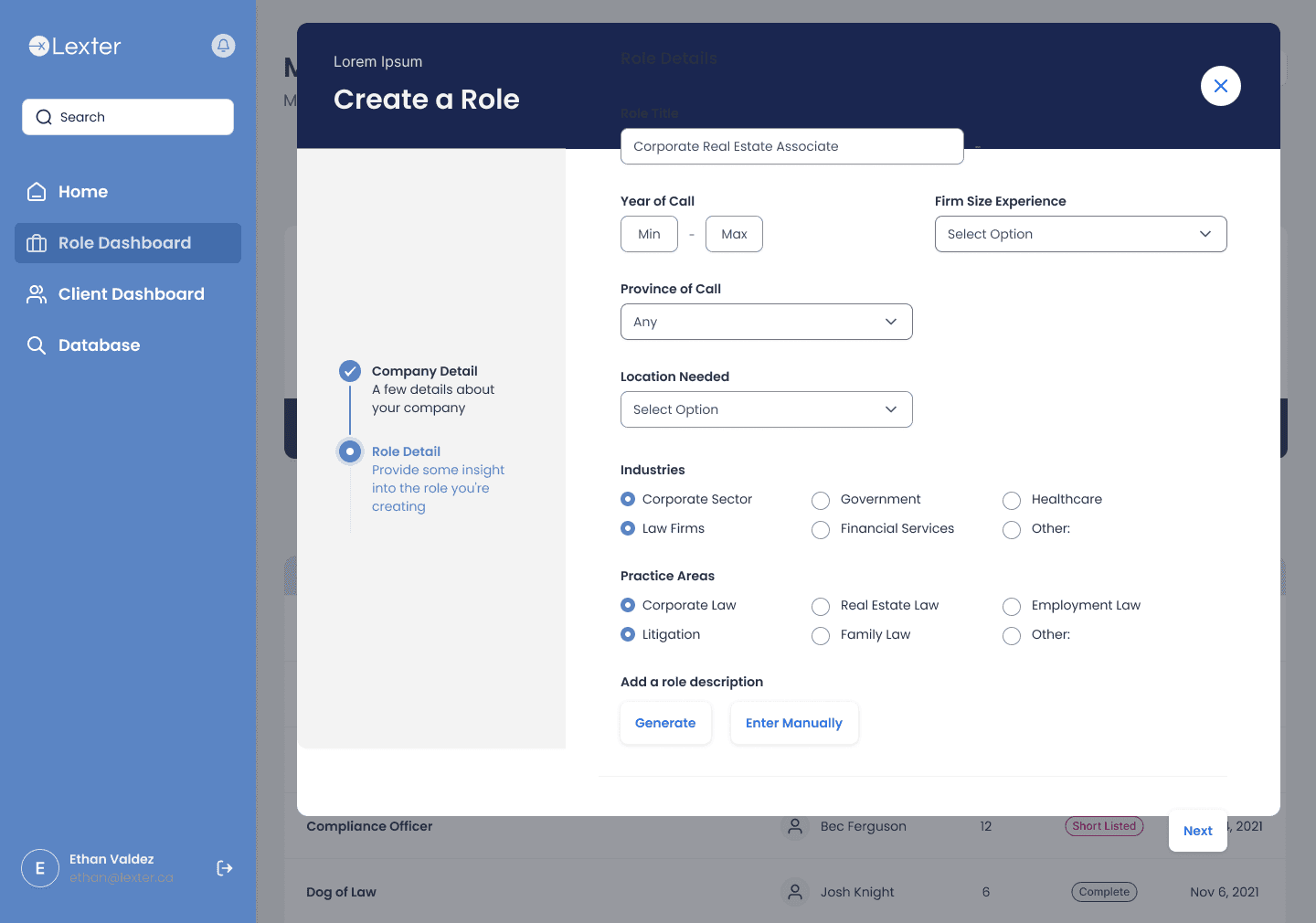
The value of the database was that every lawyer came out the other end in the same shape. Year of call, province of call, firm size, practice areas, industries: fields a recruiter can actually filter on, extracted from pages that were written as prose.
That structure is what let the product ask questions of the data rather than just search it.
Built and running well before this kind of pipeline was a normal thing to build.
Some of the pipeline's work was editing rather than extracting. Blind recruiting needs a version of a person's record with the identifying details removed, and doing that by hand across a database this size was never going to happen.
We had the model produce de-identified versions of bios and positions, taking out the details that reveal who someone is while leaving the substance that says what they have done. That made blind assessment possible on records that were never written with it in mind.
A directory that is accurate on the day you use it is a different product from one that was accurate at launch. Lexter could answer questions its competitors could not, because the data underneath was broader and fresher.
The company has since moved on to other things. The pipeline is the part worth talking about: a large, unglamorous piece of AI automation that ran quietly underneath the product and did work no team could have done by hand.
If you are looking at a job that is too large, too repetitive, or too constant for people to keep up with, tell us what it is. We will tell you honestly whether automation is the answer.