Rated 5.0 out of 5,5.072 Google reviewsSanity builds for Krown, Hopewell Residential, ERP-One and our own site
Headless sites we've built
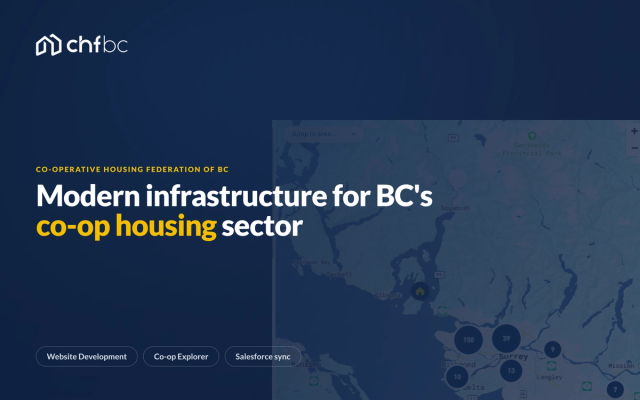
Krown
Hopewell Residential
ERP-One
SocialNext
What a headless CMS is, and when it's worth it
Headless means the place you write and the website that shows it are separate.
In a traditional CMS like WordPress, the editing screen, the database and the page templates are one system. A headless CMS keeps only the content part. Pages, products, people and locations are stored as fields, and any front end can ask for them over an API: a website, a set of microsites, a mobile app, an ad feed or an AI assistant.
That split pays off when one piece of content has to appear in more than one place, when page speed affects sales or search, or when a site has outgrown its theme. Krown's 300+ dealer sites all read from one Sanity Studio. Each of Hopewell Residential's homes is one record that shows up on the website, in a printable brochure and in its Google and Meta ad feeds.
It isn't worth it for every site. A small marketing site that changes a few times a year costs less to build and run on Webflow or WordPress, and so does a team that wants to drag sections around a page. We'll tell you on the first call whether headless fits.
Signs a headless build fits
Most of the headless sites we build started with one of these.
Content used in several places
The same content has to reach a website, microsites, an app, ad feeds or print. With headless, you write it once and every output reads the same record.
French and English across every page, URL and component, built into the content model rather than added with a plugin. Krown's sites run this way.
Page speed and search
The front end sends plain HTML that search engines and AI crawlers can read without running scripts. On Astro, one of our case study pages went from 1.3 MB of JavaScript to 14 KB.
Plugin and page-builder trouble
The front end has no plugins to update and no page builder for an editor to break. Editors fill in fields; the design lives in code.
A new headless site usually takes three to five months, and the content model comes first.
01
Content model (weeks 1 to 3)
We list every kind of content you have, where each one needs to show up and who edits it, then model it as types and fields. You give us your current site, analytics and time with the people who'll edit.
You keep: the content model, written down, and the site map.
02
Design system (weeks 3 to 8)
We design the pages as components, and each component maps to fields in the model. You review designs in Figma.
You keep: the Figma file and the component library.
03
Studio and front end (weeks 6 to 14)
We set up the Sanity Studio around your editors, with previews of the real page before anything is published, and build the front end in Astro or Next.js. You review on preview links as each part lands.
You keep: the code, the Sanity project and the hosting, in accounts you own.
04
Content move and launch
Existing content moves by script, so nothing is retyped, and every old URL gets a redirect.
You keep: the redirect map and analytics set up to match.
05
Training and handover
We train your editors in the Studio before launch and stay on a care plan if you want one.
You keep: a team that can publish without us.
Headless numbers
From sites we've built on Sanity.
300+
Krown dealer sites running from one Sanity Studio
13.8 → 5.7
Krown's average Google position, from the first month after launch
2× a day
Hopewell's listings refresh its Google and Meta ad feeds, replacing a spreadsheet updated by hand each week
1.3 MB → 14 KB
JavaScript on one of our case study pages, before and after we moved this site to Astro
What we settle before the build
We work through these with you before building any components.
The content model
Teams often model content around the first design, and two redesigns later the model is in the way. We model the content first and design around it.
Editor seats and running costs
Sanity charges per editor seat on its paid plans, and the front end needs hosting. We lay out both for your team size before you commit.
Where your data lives
Sanity stores data in Europe. That's fine for most projects, but it can rule Sanity out for Canadian public sector work, and we'll say so early. WordPress on Canadian hosting is usually the answer there.
Preview for editors
Editors see the page as it will look before they publish. Without it, headless editing feels like filling in a form blind.
Search and AI readers
Before launch we check server rendering, structured data, the sitemap and a redirect for every old URL.
Accessibility
We build to WCAG 2.2 AA and test the real templates. A formal audit is separate work.
Headless WordPress and headless Shopify
Headless doesn't have to mean Sanity.
Headless WordPress keeps WordPress as the editing screen and builds the front end in Next.js or Astro. It suits a team that knows WordPress well and wants a faster site without learning a new editor. The catch is that you still update WordPress and its plugins, and page-builder layouts stop working, because the front end no longer uses the theme. For most teams in that spot we'd move the content to Sanity instead, which our website migration service covers.
Headless Shopify keeps Shopify for products, checkout and orders, and pairs a custom storefront with Sanity for the editorial content around them. We've built one this way. It costs more than a theme, so it fits stores whose content and brand have outgrown theme sections. For most stores, a well-built Shopify theme is the better call.
This site runs on Sanity
papercrane.ca runs on Sanity and Astro, and the same Studio runs a second site.
One Sanity Studio feeds two sites: this one, on Astro, and go.papercrane.ca, on Next.js, where our proposals and audits live. Editors write in one place, and each site reads only what it needs.
When we moved this site from Next.js to Astro in November 2026, the content didn't move at all. Only the front end changed. A page like this one ships about 9 KB of JavaScript, and every page has a Markdown copy that AI tools can read, generated from the same content.
What a headless build costs
Most of our headless builds cost between $25,000 and $75,000 CAD. Where a site falls depends on its content types and templates, how much content moves across, and what it connects to. Registered charities and nonprofits get 10% off.
Content types
How many kinds of content the model holds, and how they link to each other.
Templates and components
How many kinds of page the site needs, not how many pages.
Feeds and integrations
Ad feeds, CRMs, booking or search tools that read from or write to the content.
Languages and sites
A second language, or several sites on one Studio.
Moving an existing site onto Sanity without a redesign is priced as a website migration.
Paper Crane is one of our go-to partners when it comes to custom web development. The team is wonderful to work with, super collaborative, and always on top of the latest tech with great pros/cons lists around various platform options depending on a client's needs. Robert is a great addition to any digital pitch team too as he's able to outline explain tech options in a results-friendly way. And don't even get me started on how awesome their tracksuits are...
Jill Dewes · Google ·
5 out of 5 stars.
I've worked in the agency space for a long time, and with partners of all shapes and sizes.
Rob, Tara and the rest of the team are top-notch. They have a LOT of technical acumen, have watertight ops, and are all-round good humans. They punch above their weight in terms of development, automation, AI deployment and strategy.
If you're considering hiring them, my advice would be you should.
Jake Surrey · Google ·
5 out of 5 stars.
Rob & the rest of the Paper Crane team have been invaluable to our success! They've helped us build our vision from the ground up, and walked us through it every step of the way. They built a sophisticated backend system that orchestrates multiple complex data sources while optimizing it for easy use on the front-end.
Between all the complex features they've built and the seamless Ui/Functionality they've been nothing short of excellent. For anyone needing a development partner who can build complex, multi-source data platforms with user-friendly management interfaces, Paper Crane is the best choice out there!
A content management system that stores content as structured data and doesn't render pages itself. A separate front end, such as a Next.js or Astro site, asks for the content and displays it. Sanity, Contentful and Storyblok are headless; a standard WordPress install isn't.
Is a headless site better for SEO?
It can be. Pages built on Astro or Next.js send the full content as HTML and load fast, which helps search engines and AI tools read them. After a rebuild, rankings still come down to redirects, titles, structured data and content. Krown's average Google position went from 13.8 to 5.7 after its headless rebuild.
Can our team edit the site without a developer?
Yes. Editors work in a Studio set up for them, with fields for each kind of content, components that keep pages on brand and a preview of the real page. We train them before launch. Changing the layout of a component is developer work, and that's deliberate.
Why Sanity and not Contentful or Storyblok?
Sanity is what we know best: we've been a partner since 2022, and its Studio can be shaped around how each team works. Contentful and Storyblok are good products, but we haven't shipped production sites on them, so we don't sell them.
Next.js or Astro?
Astro for sites that are mostly content, like this one: it sends the least JavaScript. Next.js for sites that behave like apps, with sign-ins, dashboards or a lot of interaction. Both read from the same Sanity content, so the choice can change later.
What does a headless site cost to run each month?
Sanity has a free plan for small teams, and its paid plans charge per editor seat. Hosting the front end on Vercel or a similar host adds a monthly fee that depends on traffic. We give you both numbers for your team size before you commit.
How long does a headless build take?
Three to five months for a new site with a new design. Moving an existing site onto Sanity without a redesign usually takes four to six weeks.
Can you take over an existing Sanity site?
Yes. We start by reviewing the content model and the Studio, then tell you what's worth keeping and what to change.
How much does a headless website cost?
Most of our headless builds cost between $25,000 and $75,000 CAD. You get a fixed price after the content model is scoped.
Thinking about going headless?
Book a 30-minute call. Tell us what your content has to feed and who edits it, and we'll tell you whether headless is worth it for you.
We use cookies to see how the site is used and to measure our ads. Accept, or decline and we'll keep to the cookies the site needs to work. Privacy policy